








Mar 6th
Students, scholars and media professionals will discuss media “in the fast-paced world of digital journalism” at a University of Colorado Boulder symposium March 14-15.
CU-Boulder’s Journalism and Mass Communication program will host the conference including two talks that are free and open to the public.
Jay Rosen will give one of the talks on March 14 at 10 a.m. at the Old Main Chapel. Rosen, who will discuss “The Ethics of Point-of-View Journalism,” is a journalism professor at New York University and a media critic. He is an adviser at First Look Media, a new venture featuring the work of Glenn Greenwald, who published the explosive national security documents leaked by former government contractor Edward Snowden. Rosen also writes the blog PressThink.
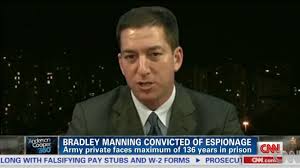
Glen Greenwald is a shining example of good digital journalism. Others,,,not so much.
At 2 p.m. on March 14 at the Old Main Chapel, Steve Buttry will present “Upholding and Updating Journalism Values.” Buttry is the digital transformation editor for Digital First Media. The company operates about 800 multi-platform media products nationally, including several in Colorado. He is a prominent consultant in digital journalism and author of the blog The Buttry Diary.
During other portions of the symposium, participants will explore issues such as the loss of the “ethics support group” found in traditional newsrooms for today’s freelancers, developers and entrepreneurs; today’s ethics challenges in the journalism work environment; and what the latest research and journalistic practice says about norms and values in the digital age.
“Technology has enabled new forms of public communication that raise new kinds of ethical questions,” said Paul Voakes, CU-Boulder professor of journalism and mass communication. “For example: When corrections can be made seamlessly and instantly online, is first-time accuracy now overrated? What are the appropriate journalistic uses of drones? In a profession increasingly populated by developers, activists, entrepreneurs and volunteers, where does a code of ethics fit?”
Excluding the two public talks, symposium participants will work in groups to write brief papers about the issues discussed. The papers could lead to collaborative essays or research projects, according to symposium organizers.
The symposium is supported by the Ethics and Excellence in Journalism Foundation, Colorado State University and the Association for Education in Journalism and Mass Communication.
For more information about CU-Boulder’s Journalism and Mass Communication program visit http://journalism.colorado.edu/.
-CU-

Mar 4th
Two Florida reporters have won the 2014 Al Nakkula Award for Police Reporting from the University of Colorado Boulder’s Journalism and Mass Communication program and the Denver Press Club.
The $2,000 Nakkula prize goes to reporters Megan O’Matz and database editor John Maines of the South Florida Sun Sentinel for their series, “Cops, Cash, Cocaine.” The piece uncovered a police department’s secret scheme to lure drug dealers to a small town, entangle them in a sting and pocket money from the operation.
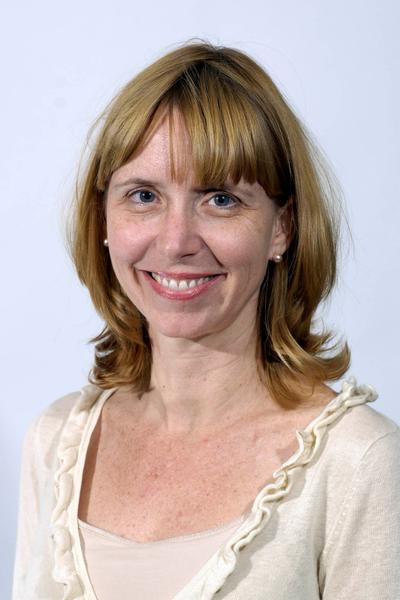
Megan O’Matz wrote a story about corrupt Florida police ripping off cocaine dealers
The award is named in honor of the late Al Nakkula, a 46-year veteran of the Rocky Mountain News whose tenacity made him a legendary police reporter, according to award organizers. The contest has existed since 1991 and this year drew more than two dozen entries from major publications around the country including the Los Angeles Times, the Seattle Times, the Boston Globe and Newsday.
Five veteran reporters, who worked at the Rocky Mountain News before its closure in 2009, judged the contest. Most of the reporters worked with Nakkula.
“The Sun Sentinel’s report stood out for the sheer doggedness of the reporting and the sheer audacity of the operation the newspaper exposed,” said Nakkula award judge Kevin Vaughan, an investigative reporter for Fox Sports.
Reporters O’Matz and Maines found that the Sunrise, Fla., police department enticed drug buyers to come to town, arrested them, confiscated their cash and cars and kept millions in proceeds. The officers who participated also received hundreds of thousands of dollars in overtime pay.
“ ‘Cops, Cash, Cocaine,’ was one of those stories that allowed Megan O’Matz and John Maines to deploy the skills they have become known for around here: piecing together bits of information, reviewing documents endlessly, talking to sources and checking things out in person. In other words: old-fashioned tenacity,” said Howard Saltz, Sun Sentinel editor.
“The result of their investigation not only revealed something that still boggles the mind when you read it, but served the community by forcing a highly unusual — and arguably dangerous — police operation to shut down,” he said.
O’Matz has received numerous state and national honors for previous work and was a 2006 finalist for the Pulitzer Prize in investigative reporting.
Series co-reporter Maines has been a database editor for the Sun Sentinel for 16 years. He and a Sun Sentinel colleague won the 2013 Pulitzer Prize for Public Service.
Second place in this year’s competition was awarded to reporters John Diedrich and Raquel Rutledge of the Milwaukee Journal Sentinel for their series, “Backfire.”
The judges also sent a special commendation to the staff of the Pittsburgh Post-Gazette for the depth and breadth of their work in 2013. The staff entered two major reporting projects in the contest.
For more information about the Al Nakkula award visit http://journalism.colorado.edu/al-nakkula-award/. For more information about CU-Boulder’s Journalism and Mass Communication program visit http://journalism.colorado.edu/.
-CU-
Feb 20th

“This symposium provides the CU community with an excellent opportunity to explore new political and cultural terrain opened up by digital media,” said symposium organizer Andrew Calabrese, a professor of journalism and mass communication. Among the speakers will be Columbia University Professor Todd Gitlin, who will present “Arab Spring and Occupy Wall Street: Why 2011 Was Not 1968” on Feb. 27 from 5:30 to 7 p.m. in room 150 of the Eaton Humanities Building. Gitlin’s upcoming e-book, “Occupy Nation: The Roots, the Spirit and the Promise of Occupy Wall Street,” looks at how that movement differs from the uprisings of previous eras. Mark Briggs, who coined the term “Journalism 2.0,” will talk about a new breed of ‘journopreneurs’ who are launching startups that break from traditional advertising models to find new sources of revenue for delivering news and information. Briggs is the director of digital media for KING-5 TV in Seattle and the Ford Fellow in Entrepreneurial Journalism at the Poynter Institute. His session is on Feb. 29 from 5:30 to 7 p.m. in room 150 of the Eaton Humanities Building.  Experts at the conference also will discuss new ways of archiving digital records and how these collections are being used in places such as libraries and museums. Librarians and archivists are looking for new ways to preserve such records, according to symposium organizers. The symposium runs in conjunction with an effort to create a new interdisciplinary school or college at CU-Boulder that may include studies in communication, technology, multimedia storytelling, commercial design and the digital arts and humanities. The effort is called the Information, Communication, Journalism, Media and Technology, or ICJMT, initiative. Journalism and Mass Communication is sponsoring the symposium in support of the ICJMT initiative, with additional support from CU’s Keller Center for the Study of the First Amendment, the Department of Political Science, the English department, the Film Studies Program, the Center for the Humanities and the Arts, CU Libraries and the Advertising A2B certificate program. For more information including speakers and event locations visit http://www.icjmtsymposium.org/.