



Posts tagged sustainability

cuseal

CU: New colleges, including a J-School are proposed. Others are environment and sustainability

0

University of Colorado Boulder Provost Russell L. Moore today announced the campus will be taking the first steps needed to formally propose the creation of the first new colleges on the campus in 50 years: a college focused on media, communication and information, and a college designed around CU-Boulder’s strengths in the environment and sustainability.  Both would require the approval of the Board of Regents.

“These proposed new colleges will create exciting synergies among related disciplines,” said Moore. “They will build on CU-Boulder’s programmatic strengths and excellence, attract new high-quality students and faculty, and facilitate scholarship and teaching that will prepare students for careers in a wide range of exciting fields.”

Moore said the college or school devoted to media, communication and information would house programs in journalism, advertising and design, communication, film production and film studies, media studies and a new department in information studies.

newsroom

“If approved by the Board of Regents, this college will create exciting opportunities for our students and will bring together a dynamic and creative faculty in these disciplines,” said Moore. “From this college, we will create working journalists, editors and media professionals, communication scholars, media experts, advertisers and media designers, filmmakers and film theorists, and experts in the emerging field of information architecture and design. The possibilities are truly exciting.”

A college of the environment and sustainability, Moore said, if approved, will “bring together some of the finest researchers and teachers on the campus” in disciplines and programs that include environmental science, environmental policy and environmental design while “drawing upon assets from some of the campus’s most dynamic institutes,” including the Cooperative Institute for Research in Environmental Sciences (CIRES), the Institute of Arctic and Alpine Research (INSTAAR) and the Renewable and Sustainable Energy Institute (RASEI).

“This will bring together in one college a concentration of faculty who represent some of CU-Boulder’s mostly highly ranked, and highly successful, research in environmental sciences,” said Moore. “The graduates of the college we envision will be highly sought after in fields ranging from design of the built environment to alternative energy development to the formation of environmental and energy policy.”

In both cases, said Moore, the move to create the colleges is supported by three years of work, by recommendations from internal and external committees who reviewed existing programs and structures on the campus, and above all, “by the clear economic, workplace and research demands of the world around us.”

“This isn’t adding to an ivory tower – it’s breaking apart the ivory tower and investing in a bright and very real future for our students and our faculty,” said Moore. “This will challenge us to rethink how we teach, how we organize ourselves as a research and scholarly community, how we generate and use resources, and how we deliver graduates into the job market or into realms of further scholarship.”

Moore said the next step in this process is to form implementation committees to create blueprints for forging the colleges, examining such issues as funding and fundraising, administration, curriculum development and how to integrate the work of the institutes with the role and mission of the new colleges. The goal is to submit proposals to form the colleges to the CU Board of Regents within the next 12 months, and to form the new colleges and begin enrolling students by 2015.

Moore also thanked a host of individuals who drove the internal and external processes to help envision the colleges, including “Merrill Lessley, who chaired the ICMT Exploratory Committee, Andrew Calabrese who chaired the Information Communication Journalism Media and Technology Steering Committee, Helmut Muller-Sievers and Bob Craig who organized conversations in the social sciences and the humanities and arts around these issues last summer, Michele Jackson who conducted an online discussion group, and Sharon Collinge who chaired the Environmental Studies Visioning Committee.”

CU-Boulder Chancellor Philip DiStefano lauded the work of the committees.

“Forming new academic entities is no small task,” said DiStefano. “From the volunteer committee members who gave their time, to our faculty who gave their time and input into those committees, we have seen the best of what CU-Boulder is about: passion, vision, energy and ingenuity. We are confident our new colleges and schools will embody these same values.”

-CU press release-

Art Cleaners Top Hat Supply Boulder Army Store Jann Scott Live Ron Baird Blackwind Swiss Chalet Timepieces Tramission Technology Services DP Dough Boulder Abo's Pizza Boulder Toyota Apollo Ink - Printing and Design Perry's Shoe Shop Village Coffee Shop Marie's Cafe Eldorado Springs Water Theatrical Costumes Etc... Khow Thai Cafe Boulder Savory Spice Shop in Boulder Hip Consignment in Boulder Liberty Tax Service H Burger - Boulder South Mouth Wings Sturtz and Copeland, Florist and Garden Center in Boulder

Related posts:

boulder-county-colorado-logo

Boulder County Recognized for its Leadership on Reducing Carbon Pollution and Addressing Climate Change

0


Boulder County awarded a 2013 Organizational Leadership Award as part of the annual the Climate Leadership Awards sponsored by EPA and other leading climate change organizations


Boulder County, Colo. – Boulder County is pleased to be among fewer than a handful of local governments recognized for its leadership and innovation around the issue of climate change and clean energy.


Today it was announced by the EPA’s Climate Protection Partnerships Division and its co-sponsors, The Climate Registry (The Registry), the Center for Climate and Energy Solutions (C2ES), and the Association of Climate Change Officers (ACCO), that Boulder County is a winner of the 2013 Organizational Leadership Award as part of the annual the Climate Leadership Awards (CLA).


The CLA is a national awards program that recognizes and encourages exemplary corporate, organizational, and individual leadership in reducing carbon pollution and addressing climate change. Award winners must demonstrate leadership in reducing greenhouse gas emissions in internal operations and throughout the supply chain, as well as integrating climate resilience into their operating strategies.

GOOD

GOOD


“We are thrilled to be recognized for the work of our staff and our partners throughout the community who have made it their tireless priority to engage residents of Boulder County in activities and actions that have led to real change on behalf of the environment and reducing our carbon footprint countywide,” said Cindy Domenico, Chair of the Boulder County Commissioners. “Whether it be in the realm of energy efficiency, transportation, Zero Waste, residential and commercial building retrofits, or significant investments in renewable energy options, we’re proud to be on the leading edge of innovation in these areas.”


This year’s awards mark a noteworthy increase in public-sector city and county engagement, a priority effort that Boulder County has championed in collaboration with its municipal partners since the creation of the county’s Sustainability Initiative in 2005.


“It is an honor to receive recognition for the commitment that our past and present County Commissioners and sustainability staff have made to a healthier and more environmentally sustainable place to live,” said Boulder County Sustainability Coordinator, Susie Strife.  “This award is a reflection of the hard work, progressive decision making and leadership of Boulder County and the collaborative partnership with all of our municipalities, in particular the Cities of Boulder and Longmont.”

BAD!

BAD!


Programs like EnergySmart, Boulder County’s Energy Efficiency service, are helping Boulder County reduce greenhouse gas emissions from existing buildings. EnergySmart has helped over 8,600 homes and 2,400 businesses with energy efficiency upgrades.


In addition to reducing greenhouse gas emissions, EnergySmart is stimulating the local economy with over $16 million in energy efficiency upgrades and advancing the state’s energy independence. EnergySmart is a collaborative partnership throughout Boulder County, and is funded by seed funding from the Department of Energy’s BetterBuildings Program, combined with contributions from the City of Boulder’s Climate Action Plan tax and the City of Longmont.


Other demonstrations of the county’s forward thinking actions include the development of the Climate Change Preparedness Plan, blueprints for action around sustainability and energy efficiency, and the county’s recently completed Transportation Master Plan which identifies programs, services, and facilities that Boulder County will implement to help people get where they need to go in the future in a safe, efficient, and environmentally sensitive manner.


The CLA awards will be presented tonight at the Climate Leadership Conference in Washington, D.C.


More information about the awards and award winners is available at epa.gov/climateleadership/awards/ or through the EPA’s news release.

Art Cleaners Top Hat Supply Boulder Army Store Jann Scott Live Ron Baird Blackwind Swiss Chalet Timepieces Tramission Technology Services DP Dough Boulder Abo's Pizza Boulder Toyota Apollo Ink - Printing and Design Perry's Shoe Shop Village Coffee Shop Marie's Cafe Eldorado Springs Water Theatrical Costumes Etc... Khow Thai Cafe Boulder Savory Spice Shop in Boulder Hip Consignment in Boulder Liberty Tax Service H Burger - Boulder South Mouth Wings Sturtz and Copeland, Florist and Garden Center in Boulder


-

Related posts:

cuseal

CU’s nLab breeds real-world innovation among all walks of students

0


Interdisciplinary thinking bolsters innovation. That’s the concept behind the University of Colorado Boulder’s new nLab, a mobile hub that allows students to develop their entrepreneurial ideas through peer and mentor-based collaboration, sustainability resources and other tools.

The free resource, launched last fall by CU-Boulder’s Deming Center for Entrepreneurship at the Leeds School of Business, is designed to help students campus wide tap into communities beyond their academic spheres. The CU Environmental Center, an nLab partner, offers specialized support to integrate sustainability into student ideas.

A passerby chats with Sarah Dawn Haynes (right) of the CU Environmental Center near the kiosk that is part of nLab -- a free resource that allows students to explore their ideas through interdisciplinary collaboration and mentorship. (Photo by Patrick Campbell/University of Colorado)

A passerby chats with Sarah Dawn Haynes (right) of the CU Environmental Center near the kiosk that is part of nLab — a free resource that allows students to explore their ideas through interdisciplinary collaboration and mentorship. (Photo by Patrick Campbell/University of Colorado)

The nLab supports cross-campus entrepreneurship curricula, the CU New Venture Challenge business plan competition and individuals who want to explore ideas.

“You don’t have to be a business major to think like an entrepreneur,” said Costa Raptis, a junior in geography at CU-Boulder. “You just have to be driven and have a versatile mind and kind of know what you’re after.”

Raptis, who’s interested in cultural anthropology and marketing, is exploring his idea — a talent agency that operates without a traditional hierarchy — using the nLab. He’s been paired through nLab with an employee-owned solar company for mentorship.

Other student ideas that have been brought to the nLab are a cosmetic line and a job-search website called Startups 2 Students, which matches students with position openings at unique companies.

The nLab includes a website where users can post ideas and browse existing projects. It also hosts weekly co-working sessions on campus and provides a mobile kiosk intended to spark both planned and impromptu meetings, and to serve as a workspace. Faculty also can enlist nLab.

“I’m beginning to use nLab as an additional tool to give my students a safe, welcoming and helpful place to apply course material to ideas of their own and others,” said Eben Johnson, a CU-Boulder lecturer in the Lockheed Martin Engineering Management Program. “The value of nLab is that it’s for the whole campus. From music to biology, history and finance, great ideas for new products and services are found everywhere.”

Johnson teaches an undergraduate and graduate-level course called Marketing and High-Tech Ventures. Each semester, his students conceptualize new ideas from lithium ion batteries for cell phones to algae nutritional supplements, and nLab will be a resource for such projects, he said.

Other campus supporters of nLab are CU’s Technology Transfer Office; the Silicon Flatirons Center for Law, Technology and Entrepreneurship; the Alliance for Technology, Learning and Society, or ATLAS; and the Lockheed Martin Engineering Management Program.

For more information about nLab visit http://nlab.colorado.edu/. For more information about the Deming Center for Entrepreneurship visit http://deming.colorado.edu/.

Art Cleaners Top Hat Supply Boulder Army Store Jann Scott Live Ron Baird Blackwind Swiss Chalet Timepieces Tramission Technology Services DP Dough Boulder Abo's Pizza Boulder Toyota Apollo Ink - Printing and Design Perry's Shoe Shop Village Coffee Shop Marie's Cafe Eldorado Springs Water Theatrical Costumes Etc... Khow Thai Cafe Boulder Savory Spice Shop in Boulder Hip Consignment in Boulder Liberty Tax Service H Burger - Boulder South Mouth Wings Sturtz and Copeland, Florist and Garden Center in Boulder

Related posts:

boulder-county-colorado-logo

Boulder County Environmental Sustainability Plan available for public review

0


Boulder County, Colo. – After years of collaborative work with county staff, elected officials and local partners, Boulder County has released a draft of its Environmental Sustainability Plan for public comment and feedback prior to its adoption on Jan. 3.


Once adopted, there will be an extensive public review process to continue to tweak parts of the plan and develop an implementation strategy for each of the elements of the plan.


What:              Public hearing to adopt the Environmental Sustainability Plan

When:             Thursday, Jan. 3 at 11 a.m.

Where:            Commissioners’ Hearing Room, Boulder County Courthouse, third floor, 1325 Pearl St., Boulder (map)


Comments may also be submitted to commissioners@bouldercounty.org.

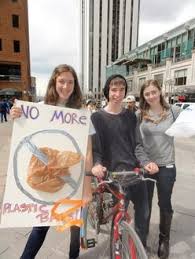
Anti-fracking Rally

The plan was drafted to articulate Boulder County’s vision to create a more environmentally sustainable community as well as provide a blueprint for achieving the county’s collective environmental sustainability goals. In addition, it’s intended that the plan will act as a launching point to help set communitywide environmental priorities and develop shared resources to achieve more regional environmental sustainability goals.


The plan addresses county internal operations as well as the environmental services provided for residents and businesses. It is broken into nine categories including air quality, climate, ecological health, energy and buildings, health and wellness, local food and agriculture, transportation, water and zero waste.


Each section concludes with policy priorities and actions that employees, residents and businesses can take to positively impact Boulder County. More specific timeframes, funding sources, selection of implementation leaders and/or partners will be addressed in an implementation plan, which will guide Boulder County employees in executing the strategies in the Environmental Sustainability Plan.


The next phase of the environmental sustainability planning process is to solicit feedback and insight from the community including key stakeholders and experts on what is missing from the plan and how to best carry out the strategies outlined.


For a copy of the plan, please visit:  http://www.bouldercounty.org/sustainability/bc/pages/envsustainabilityplan.aspx

Art Cleaners Top Hat Supply Boulder Army Store Jann Scott Live Ron Baird Blackwind Swiss Chalet Timepieces Tramission Technology Services DP Dough Boulder Abo's Pizza Boulder Toyota Apollo Ink - Printing and Design Perry's Shoe Shop Village Coffee Shop Marie's Cafe Eldorado Springs Water Theatrical Costumes Etc... Khow Thai Cafe Boulder Savory Spice Shop in Boulder Hip Consignment in Boulder Liberty Tax Service H Burger - Boulder South Mouth Wings Sturtz and Copeland, Florist and Garden Center in Boulder

Related posts:

Boulder-B-Cycle

Boulder renewed as a Platinum Bicycle Friendly Community by the League of American Bicyclists

0


Across the U.S., bicycling is on the rise – thanks in part to communities like Boulder taking steps to make riding easy, accessible and safe. Today, the League of American Bicyclists (LoAB) announced the latest round of Bicycle Friendly Communities (BFC) and renewed Boulder’s standing as a Platinum Bicycle Friendly Community. The Platinum award recognizes Boulder’s continued commitment to improving conditions for bicycling through investments in education, infrastructure, policies and promotion.


“We are excited that Boulder recognizes that simple steps to make biking safe and comfortable pay huge dividends in civic, community and economic development,” said League President Andy Clarke. “Bicycling is more than a practical, cost-effective solution to many community challenges – it’s a way to make Boulder a place where people don’t just live and work, but thrive.”


The BFC program is revolutionizing the way communities evaluate quality of life, sustainability and transportation networks by allowing them to measure their progress toward improving bicycle-friendliness. The free program provides a roadmap for building a Bicycle Friendly Community and the application process itself has become a rigorous educational tool.

In September, the league announced the “Diamond” level designation to raise the bar for communities like Boulder to move beyond Platinum.  The LoAB will visit Boulder in December to conduct an audit and work with the local cycling community on creating clear goals to achieve Diamond status.  The primary measure of Diamond designation is the number of people riding and community satisfaction.  The five levels of the award – diamond, platinum, gold, silver and bronze – provide a clear incentive for communities to continuously improve.


“Boulder’s Platinum designation renewal recognizes many years of sustained effort by the community, city staff and local policy makers,” said Director of Public Works for Transportation Tracy Winfree. “It is a great accomplishment and celebrates the community’s commitment to bicycle friendliness.  Given the City of Boulder’s ethic of ‘continuous improvement,’ we appreciate the league’s challenge for communities like Boulder to reach beyond Platinum to the new Diamond designation.”


Since the BFC program’s inception, more than 500 communities have applied and there are now 242 Bicycle Friendly Communities in 47 states across America. To learn more about the Bicycle Friendly Communities, visit www.bikeleague.org/community.

Art Cleaners Top Hat Supply Boulder Army Store Jann Scott Live Ron Baird Blackwind Swiss Chalet Timepieces Tramission Technology Services DP Dough Boulder Abo's Pizza Boulder Toyota Apollo Ink - Printing and Design Perry's Shoe Shop Village Coffee Shop Marie's Cafe Eldorado Springs Water Theatrical Costumes Etc... Khow Thai Cafe Boulder Savory Spice Shop in Boulder Hip Consignment in Boulder Liberty Tax Service H Burger - Boulder South Mouth Wings Sturtz and Copeland, Florist and Garden Center in Boulder

Related posts:

Beetle Kill

CU-Boulder wins $1.4 million NSF award for climate change, water sustainability study

0

The University of Colorado at Boulder has been awarded $1.4 million for a new study on how changes in land use, forest management and climate may affect trans-basin water diversions in Colorado and other semi-arid regions in the western United States.

The grant, part of the National Science Foundation-U.S. Department of Agriculture Water Sustainability Climate Program, was awarded to Assistant Professor Noah Molotch of the geography department. Molotch and his team will be identifying thresholds, or “tipping points,” of change in land use, forest management and climate that may compromise the sustainability of the policies and procedures that dictate the timing and quality of water diverted from Colorado’s West Slope to the Front Range.

Molotch said that in Colorado and semi-arid regions around the world, trans-basin water diversions that redirect water from areas of surplus to areas of demand are based on policy agreements and infrastructure operations made under climatic and land use conditions that may differ considerably from conditions in the near future. Measurements over the past 50 years, for example, suggest a broad-scale reduction in snowpack water storage in the western U.S. because of regional warming temperatures, a trend due in part to a shift from snowfall to rainfall, he said.

The Colorado Big Thompson Project depends upon a dwindling supply of Western Slope snowpack.

In addition, land-cover changes associated with population growth, fire suppression and mountain pine beetle outbreaks have altered the hydrology of mid-mountain ecosystems in the West, said Molotch, who also is a scientist at NASA’s Jet Propulsion Laboratory in Pasadena, Calif. CU is teaming up with the National Center for Atmospheric Research in Boulder on the NSF-funded project.

The NSF award comes on the heels of a May 2012 agreement between water managers in Summit and Grand counties on Colorado’s West Slope and in the Denver area on how best to share water from the Colorado River basin. “This is a great example of communities that historically battled for water resources coming to the table in a good faith effort to find solutions to water allocation issues,” said Molotch. “These groups have no pretenses about the potential impacts of climate change and realize we can’t afford to bury our heads in the sand on this issue.”

Collaborators on the project include Patrick Bourgeron and Mark Williams, fellows at CU-Boulder’s Institute of Arctic and Alpine Research, and David Gochis, Kathleen Miller and David Yates of NCAR.

A study led by Molotch published Sept. 10 in Nature Geoscience tied forest “greenness” in the western United States to fluctuating year-to-year snowpack.  The study indicated mid-elevation mountain ecosystems — where people increasing are building second homes and participating in a myriad of outdoor recreational activities — are most sensitive to rising temperatures and changes in precipitation and snowmelt.

“We found that mid-elevation forests show a dramatic sensitivity to snow that fell the previous winter in terms of accumulation and subsequent melt,” said Molotch, also a fellow at INSTAAR. “If snowpack declines, forests become more stressed, which can lead to ecological changes that include alterations in the distribution and abundance of plant and animal species as well as vulnerability to perturbations like fire and beetle kill.”

Colorado snowpack was at an all time low this past winter

As part of the new award, Molotch and his team will evaluate regional climate models in the mountain West developed at NCAR in an attempt to make temperature, precipitation and snowpack projections “more robust,” Molotch said. While the efficiency of water in trans-basin diversion projects in the western U.S. has in the past been enhanced by the natural storage of moisture in mountain snowpack that allowed for a slow, steady delivery of water into the system, warming temperatures are already causing this beneficial “drip effect” to be greatly reduced, he said.

If the winter temperatures are hovering around 15 degrees Fahrenheit and the climate warms by a few degrees, for example, there will be negligible impact on snowpack, Molotch said.  But if temperatures hover near freezing, slight temperature increases can trigger earlier snowmelt, and precipitation that used to be in the form of snow turns to rain, significantly affecting trans-basin water diversion activities.

“One of the most interesting aspects of this project to me is the changes we are seeing in the ‘wildland-urban interface,’ particularly in Colorado,” he said.  “There is some irony that Front Range people who have built second homes in Summit County, for example, may actually start to have an effect on the water they have relied on to be piped through the Continental Divide to the Denver area.”

Burned forests can cause early runoff

In addition to providing land and water resource decision makers with projections on how future water supply and demand will change in the future, the NSF-funded project will provide a unique educational experience for graduate students, Molotch said.

“We have climate change, snowpack, changes in land use, all feeding into the pipeline that is bringing water to Colorado’s Front Range,” he said. “As the two main stressors, climate change and land use increase, there is the possibility of pushing the systems into an unsustainable state.”

Related posts:

biotechnology258

CU’s biotechnology building earns LEED platinum rating

0

Oct. 1, 2012

The University of Colorado Boulder’s Jennie Smoly Caruthers Biotechnology building has received a Leadership in Energy and Environmental Design, or LEED, platinum rating — the highest possible evaluation — from the United States Green Building Council.

The 336,800-square-foot research and teaching facility opened in April on the university’s east campus. More than 60 faculty and 500 researchers, staff and students work inside, tackling a wide swath of challenges from cancer and heart disease to the development of new biofuels. LEED certification is a national benchmark for sustainable design, construction, operation and maintenance.

The building posed intense energy and water needs as well as complex safety requirements. “Earning a LEED platinum rating for such a large research building highlights the engineering challenges of providing safe and practical research space while ensuring the highest level of sustainability,” said Moe Tabrizi, director of campus sustainability.

The result is a building that is 30 percent more energy and water efficient than recently built buildings with a similar function. One tactic used by designers was to group labs with similar functions near each other in the building to centralize common lab equipment and maximize the efficiency of energy use, ventilation and heat recovery. The building’s mechanical and electrical systems incorporate significant energy savings and resource recovery.

The facility will have an array of large-scale, ground-mounted solar panels to help fulfill its energy needs. It also features evaporative cooling, which is the most energy-efficient cooling method in Colorado’s dry climate; daylight harvesting, lighting controls and LED technology; energy-efficient freezer compressors and lab exhaust fume hoods; low-flow plumbing and additional features.

The new building, which is prominent when accessing campus from Colorado Avenue and Foothills Parkway, also matches CU-Boulder’s distinct architectural look.

“This project demonstrates that we can achieve a high-performing, technically complex facility that blends our Tuscan Vernacular — or rural Italian — style with the demands of cutting-edge, 21st century world-class research,” said Paul Leef, campus architect.

The design team and campus engineers undertook a meticulous engineering process that combined best practices in green building, LEED requirements, and recommendations from Labs21, a program of the U.S. Environmental Protection Agency and U.S. Department of Energy that is dedicated to improving the environmental performance of laboratories.

CU-Boulder is a sustainability leader in higher education. The campus currently has five LEED platinum rated buildings, eight gold rated buildings and one silver. The university is committed to earning gold ratings or higher for all new construction and renovations on campus.

Related posts:

chicken

Boulder city budget on the uptick

0

Recommended city budget provides limited and targeted growth in 2013


On Sept. 11, Boulder City Council will begin considering a proposed 2013 budget that supports master plans accepted by council in 2012, restores partial funding for police and firefighter training, and continues funding for existing community programs and services.


City officials said that while the local economy is improving slowly, the city’s General Fund revenues will see only modest increases in 2013. As a result, City Manager Jane Brautigam recommends continuing the conservative approach initiated during the economic downturn; limited new funding will be allocated to programs supporting the highest community priorities next year, including economic vitality initiatives and significant investments in Boulder’s public facilities and infrastructure made possible by voters in November 2011.


The $256 million Recommended Budget includes $33 million in capital improvement plan spending – an increase of $10 million over 2012 levels.


“Boulder is in a stable financial position, and the conservative approach taken over the past few years has helped the city to become more efficient and effective with public dollars,” said Brautigam. “Our focus on cost recovery, restructuring city functions and not using one-time revenues to pay for on-going expenses has enabled Boulder to reduce the projected $135 million annual structural gap identified by the Blue Ribbon Commission in 2008 to $75 million annually by 2030.


“Boulder’s guiding principles of separating one-time revenues from ongoing expenditures also emphasizes the need to accurately project future one-time costs in order to carefully save over several years in preparation for those expenditures to avoid impacting Boulder’s base budget,” added Brautigam. “Because the city purposely saved for the future, we are prepared to pay as we go for planned one-time expenditures without negative impacts to the 2013 base budget.”

The 2012 Boulder City Council is keeping an eye on revenue and expenses.


The recommended base budget reflects a 2 percent increase in base budget expenditures compared to the 2012 approved budget. Boulder saved an additional $16 million outside of that base budget to pay for one-time expenses that will be incurred next year. Most of that amount consists of funding for important transportation projects leveraged by the city using state and federal sources; a once every 11- to 12-year pay-period liability associated with Boulder’s biweekly pay system, and expenditures for Boulder’s Energy Future that are now included in the city’s budget document to reflect revenues approved by the voters in November 2011.


In addition to the continued long-term emphasis to stabilize revenues and expenditures, the Recommended Budget addresses community and council priorities with a major emphasis in the following areas:

  • Restore non-personnel funding for police and firefighter training that was reduced during the economic downturn;
  • Provide additional resources for Boulder’s Energy Future, the Civic Area Master Plan and adding a resource officer for homelessness initiatives;
  • Carry out steps needed to implement master plans and department assessments, some of which began in the 2012 budget;
  • Continue and strengthen the commitment to economic sustainability; and
  • Boost the capacity of the city to renew its infrastructure and invest in technology.


The Recommended Budget provides for targeted growth in priority programs, adding one standard full-time equivalent (FTE) employee and 5.5 fixed-term FTEs in the General Fund to address these community initiatives.


Council is scheduled to begin studying the city manager’s 2013 recommended budget at its Tuesday, Sept. 11, study session. The study session will be aired live on Channel 8.


City Manager’s 2013 Recommended Budget is available online.


Related posts:

power-plant-feat

New CU power plant aims for LEED gold certification

0

CU-Boulder to begin construction of
carbon-conscious campus utility system

The first phase of construction on a University of Colorado Boulder campus utility project — which will provide efficient heating and cooling while significantly reducing the university’s carbon emissions — begins this week with utility work and construction staging on the south side of campus.

The project is expected to be complete in the winter of 2014 and involves three major components: renovation of the campus Power House on 18th Street; construction of a separate, new heating and cooling plant; and installation of new utility distribution systems.

“Safe, reliable and efficient energy is crucial for providing uninterrupted power that supports CU-Boulder’s educational and research mission,” said Steve Thweatt, executive director of Facilities Management. “This project will ensure that we can effectively consolidate the heating and cooling of a number of buildings on the Boulder campus while continuing to build our leadership in sustainability.”

The $91.1 million project, which is being funded through a combination of cash reserves and long-term debt proceeds, also will replace chiller and boiler equipment that is critical to campus operations.

Excavation will start at the beginning of September on the new heating and cooling plant, called the East District Energy Plant. Located near the Coors Events Center, the 72,000-square-foot facility will showcase energy efficiency concepts. In addition, the university is pursuing Leadership in Energy and Environmental Design, or LEED, gold certification for the building. LEED certification is a U.S. benchmark for sustainable design and construction.

As part of this project, workers will begin digging at several locations around campus in September, including 18th Street and Kittredge Loop Road, to install piping to deliver chilled water needed for campus air conditioning systems. The installation will allow the Kittredge residence complex to have air conditioning for the first time.

Next fall, renovation will begin on the original campus Power House, built in 1909. The Power House includes a cogeneration plant and will have its equipment replaced and upgraded such that the facility will be able to meet approximately 50 percent of the campus’s electrical power requirements using natural gas — a method that produces fewer carbon emissions than the local utility.

“We anticipate that natural gas will be an economic energy source for the campus for the future, which can be implemented as appropriate,” said Campus Architect Paul Leef.

As part of the renovation, the plant’s exhaust waste heat will be recovered and used to provide both heating and additional electrical power without burning extra fuel. It is estimated that the renovated Power House facility, which will be renamed the West District Energy Plant, will have the capability to reduce carbon emissions by nearly 30,000 metric tons per year.

“The two plants will be connected such that when the entire system is online, the plants will work in tandem with the upgraded distribution system to deliver a high level of efficiency and reliability, helping the campus reduce its carbon footprint,” said Moe Tabrizi, director of campus sustainability.


Related posts:

biodindex

Rebates, rebates, more rebates and…. jobs

0

City manager approves business incentive for Biodesix

City Manager Jane S. Brautigam has approved a flexible rebate application for Biodesix for up to $60,000 in rebates.  The rebates were authorized for sales and use taxes, and permit-related fees.


“The city is very pleased that Biodesix is moving its headquarters to Boulder and that the flexible rebate program will assist the company with its planned growth,” Brautigam said. “The city is committed to fostering a successful biotechnology industry in Boulder and welcomes Biodesix as a part of that community.”


A rapidly growing biotechnology company, Biodesix is focused on the development of diagnostic products for personalized medicine that inform treatment decisions and improve patient care.  The company’s first product, VeriStrat, enables more informed decision-making for advanced lung and breast cancer patients by identifying patients who are likely to have good or poor outcomes after treatment with specific drugs.


In order to take advantage of Boulder’s growing biotechnology industry and proximity to its employees, Biodesix recently moved from Broomfield to a new facility at 2970 Wilderness Place. The company currently has 33 employees at its Boulder office and plans to add up to 40 more by the end of 2013. The rebate will help Biodesix as it continues its fast-paced growth and expansion in Boulder.


“We are delighted to have our corporate headquarters here in Boulder,” commented David Brunel, chief executive officer of Biodesix. “The city’s commitment to attracting and retaining technology-based companies is admirable, and we are proud to be among the growing biotech community here.”


The flexible rebate program uses social, community and environmental sustainability guidelines. Companies choose the guidelines that best fit their circumstances, but must meet minimum requirements in order to receive the rebate. Biodesix has met the necessary requirements. Of note, Biodesix’s new facility has shower and changing facilities, and secure bike parking for its employees. In addition, the company is implementing a zero waste program, will participate in the 10 for Change Challenge and requested EnergySmart training.


Biodesix’ flexible rebate application is one of six submitted to the city in late 2011. One 2011 application is pending.  The city’s approved 2012 budget includes $350,000 in funding for 2012 flexible tax and fee rebates for primary employers.


The flexible rebate program is one of the city’s business incentives, covering a wide range of fees, equipment and construction use taxes.  Under this program, the city manager may consider a specific incentive package for tax and fee rebates to meet a company’s specific needs.  The company is then eligible for the rebate after it has made its investment and paid the taxes or fees to the city.


Related posts:

EEtrex1

Boulder approves “incentive” for another innovative energy companyy

0


City Manager approves business incentive for Eetrex

City Manager Jane S. Brautigam has approved a flexible rebate application for Boulder-based Eetrex Incorporated, for up to $26,000 in rebates.  The rebates were authorized for sales and use taxes, and permit-related fees.


The flexible rebate program is one of the city’s business incentives, covering a wide range of fees, equipment and construction use taxes.  Under this program, the city manager may consider a specific incentive package for tax and fee rebates to meet a company’s specific needs.  The company is then eligible for the rebate after it has made its investment and paid the taxes or fees to the city.


“Eetrex is part of the new energy economy and is leading innovation in power electronics and battery systems,” Brautigam said. “The city is pleased that its incentives are helping Eetrex grow and stay in Boulder.”

Employees of the Eetrex Corporarion

Eetrex develops power electronics and battery systems for the electric and plug-in hybrid-electric vehicles, telecommunications, and computing industries. The company is also the leading developer of on-vehicle inverter-chargers, known as Invergers™.  Its battery systems are being used in demonstration projects to show how they can effectively store energy from wind and solar generation to offset peak loads and utilize clean energy more effectively. In 2006, Eetrex was founded in Boulder and moved into a larger 9,700 square-foot space at 4900 Pearl East Circle, Suite 110, in June 2011.


Kathryn Miles, president of Eetrex, said, “Eetrex is committed to supporting the community and establishing our business as an environmentally conscious company.  Not only is our technology helping to green the transportation industry and support alternative energy, but we also encourage employees to ride their bicycles to work along with our zero waste practices. We are very pleased to receive this award in recognition of our efforts.”


The flexible rebate program uses social, community, and environmental sustainability guidelines. Companies choose the guidelines that best fit their circumstances, but must meet minimum requirements in order to receive the rebate. Eetrex has exceeded the minimum requirements of the community sustainability guidelines. Of note, Eetrex is implementing a zero waste policy through Green Girl Recycling and is a member of the 10 for Change challenge, which included an energy audit of its facility. The company also will request an EnergySmart training through the city’s Local Environmental Action Division.


Eetrex’s flexible rebate application is one of six submitted to the city in late 2011. Four 2011 applications are pending.  The city’s approved 2012 budget includes $350,000 in funding for 2012 flexible tax and fee rebates for primary employers.


For more information about the city’s economic vitality program, go to www.bouldercolorado.gov, click on “Business,” or call Liz Hanson at 303-441-3287.


Related posts:

tendril2

City giving incentive rebates to high-tech company

0

City Manager approves business incentive for Tendril

City Manager Jane S. Brautigam has approved a flexible rebate application for Boulder-based Tendril for up to $85,000 in rebates.  The rebates were authorized for sales and use taxes, and permit-related fees.


The flexible rebate program is one of the city’s business incentives, covering a wide range of fees, equipment and construction use taxes.  Under this program, the city manager may consider a specific incentive package for tax and fee rebates to meet a company’s specific needs.  The company is then eligible for the rebate after it has made its investment and paid the taxes or fees to the city.

“The City of Boulder is pleased that Tendril, a company founded in Boulder, is growing and able to maintain operations in the city, in part, due to city-offered incentives,” said City Manager Jane S. Brautigam.  “Tendril is at the forefront of energy technology and represents the future of the industry.”


Tendril is transforming the way the world interacts with energy. The company’s technology allows consumers to modify their behaviors to reduce both their costs and energy usage and allows the utility to speak with the consumer during peak periods in order to reduce demand. Tendril is expanding and recently renovated and moved into an approximately 52,000 square-foot space at 2560 55th St.


“We are proud to be a Boulder-based company. Boulder provides access to great talent, an unmatched quality of life for our employees and a vibrant technology community that is quickly becoming a center of clean tech innovation,” said David Rayner, chief financial officer at Tendril.  “As a leader in clean technology, it is important to us that we ‘walk the walk’ on green initiatives and we’re thrilled to receive recognition from the City of Boulder for our sustainability efforts.”

The flexible rebate program uses social, community, and environmental sustainability guidelines. Companies choose the guidelines that best fit their circumstances, but must meet minimum requirements in order to receive the rebate.  Tendril has exceeded the minimum community sustainability guidelines. Of note, Tendril participates in RTD’s Eco Pass program and has a Green Team responsible for managing environmental initiatives, including holding in-house educational sessions, purchasing energy-friendly appliances, and maintaining composting and recycling programs. The company will participate in energy efficiency programs such as receiving an energy assessment for its new facility and participating in the 10 for Change challenge.


Tendril’s flexible rebate application is one of six submitted to the city in late 2011. Five 2011 applications are pending.  The city’s approved 2012 budget includes $350,000 in funding for 2012 flexible tax and fee rebates for primary employers.


Related posts:

pesticide_use

No consensus for GMOs, pesticides, “experimental farming” in #Boulder County’s cropland policy

0


Commissioners to consider Cropland Policy at Dec. 20 public meeting


Boulder County, Colo. – The Boulder County Commissioners will deliberate on public testimony and comments received concerning the Cropland Policy Advisory Group’s (CPAG) policy recommendations for Boulder County Open Space croplands on Dec. 20 from 1-3 p.m.


What: Public meeting for the Board of County Commissioners to consider the proposed Cropland Policy for Boulder County Open Space agricultural lands

When: Tuesday, Dec. 20 at 1 p.m.

Where: Commissioners’ Hearing Room, Boulder County Courthouse, third floor, 1325 Pearl St.

Alternative viewing: Watch the meeting live online the day of the deliberations


The meeting on Dec. 20 is open to the public, but no further public testimony will be taken. All comments submitted to the commissioners via regular mail, electronic mail, phone calls and in-person testimony leading up to the Dec. 20 meeting date will be taken into consideration.


The meeting will be Web streamed live on Dec. 20. Members of the public can view the meeting online at:www.bouldercounty.org/government/pages/hearings.aspx. A taped version of the meeting will also be posted on the website as part of the commissioners’ video archive.


Background


The CPAG, consisting of nine members appointed by the commissioners, held meetings over a nine-month period to create a comprehensive Cropland Policy for Boulder County Open Space agricultural lands. The policy recommendations address soil health, economic sustainability, pest management, program administration, water, livestock, recreation and natural resource protection on agricultural lands. Through a consensus process, CPAG developed more than 80 policy recommendations. Three areas failed to achieve consensus: genetically engineered crops, use of certain pesticides, and experimental farming practices.


On Dec. 8, the county commissioners held a public hearing attended by more than 500 people, many of whom signed up to speak. At the hearing, the commissioners and attendees received a staff presentation on the county’s existing practices and programs, an overview of CPAG’s recommendations and a summary of input from the Food and Agriculture Policy Council (FAPC), the Parks and Open Space Advisory Committee (POSAC), and Parks and Open Space staff. The presentation was followed by 8 ½ hours of open public comment.


Members of the public have been providing input over the nine-month period, and all comments have been recorded as part of the public record. In addition to the many open meetings and hearings held by CPAG as they formed their recommendations for the cropland policy, several subsequent public meetings have been held to consider the draft policy: a staff presentation and joint public hearing on Nov. 15 to FAPC and POSAC, FAPC deliberations on Nov. 16, POSAC deliberations on Nov. 17, and the public open comment hearing with the Board of County Commissioners on Dec. 8.


For a copy of the Cropland Policy provided to the commissioners and information about the policy, please visit the Cropland Policy website or contact Resource Planner Jesse Rounds at 303-678-6271 or croplandpolicy@bouldercounty.org.


Related posts:

global_warming_panic-288x300

CU scientists study high-Asian snowpack for GW clues

0

USAID, CU-BOULDER PARTNER TO STUDY
WATER RESOURCES IN ASIA MOUNTAINS

A University of Colorado Boulder team is partnering with the United States Agency for International Development to assess snow and glacier contributions to water resources originating in the high mountains of Asia that straddle 10 countries.

Richard Armstrong and Mark Williams, the two faculty members leading the four-year study, said the aim is to provide a comprehensive and systematic assessment of freshwater resources in the so-called “High Asia” region, which encompasses five mountain ranges and watersheds totaling roughly 1 million square miles.  The area under study is roughly equal to one-third of the contiguous United States.

This assessment will be crucial in helping to forecast the future availability and vulnerability of water resources in the region, beginning with accurate assessments of the distinct, separate contributions to river discharge from melting glacier ice and seasonal snow.  Such data ultimately will provide a better understanding of the timing and volume of runoff in the face of climate change, said the CU-Boulder researchers.

The High Asia mountains funnel water into such major river basins as the Ganges, Brahmaputra, Indus, Amu Darya and Syr Darya. The High Asian mountain ranges under study include the Himalaya, Karkoram, Hindu Kush, Pamir and Tien Shan.  The mountain ranges straddle Bhutan, Nepal, China, India, Pakistan, Afghanistan, Kazakhstan, Uzbekistan, Kyrgyzstan and Tajikistan.

Through the partnership, scientists and students within the 10 countries will carry out collaborative research with CU-Boulder scientists. The project also will support satellite data processing by CU-Boulder staff and trainings for local institutions and observers within the study area to collect water and precipitation samples for the project.

While about one-third of the world’s population depends to some degree on fresh water within the High Asia hydrological system, not enough data exists on river and stream flows and the contribution of seasonal snow and glacier melt to paint an accurate picture of the water resources there, said Armstrong, a senior research scientist at CU-Boulder’s National Snow and Ice Data Center, or NSIDC.                       ”

The team requires an accurate quantitative portrait of each major river basin and sub-basin in High Asia. The Indus River, for example, which is fed by waterways from the Himalaya, Karakorum and Hindu Kush mountain ranges, comes together at the city of Besham, Pakistan, “where it immediately turns into the largest irrigation system in the world,” said Williams.  “The sources of water in High Asia feeding the major foothill regions where most of the people live are really the crux of this study.”

Armstrong said there is a lot of misinformation in the public arena regarding glaciers, including reports that glaciers in the Himalaya are receding faster than anywhere else in the world and, if this rapid melting continues, rivers are on track to first flood and then dry up.  “Those reports simply are not true,” Armstrong said.

USAID is an independent United States government agency that provides economic, development and humanitarian assistance around the world in support of the foreign policy goals of the United States.

“USAID wants to know how the High Asia water resources affect local populations,” said Armstrong, also a fellow at the CU-headquartered Cooperative Institute for Research in Environmental Sciences. “They are looking at this challenge from a sustainability perspective, including what is going to happen to rivers like the Indus and the Brahmaputra in the next 20 years.”

The researchers will use remote-sensing satellite data from NASA, the European Space Agency and the Japanese Space Agency to develop time-series maps of seasonal snowfall amounts and recent changes in glacier extent, said Williams, a fellow at CU-Boulder’s Institute of Arctic and Alpine Research and a CU-Boulder geography professor.  They also will use local meteorological and river discharge data from throughout the High Asia study area.

“What’s really driving this study are questions about water security,” said Williams.  “There is a lot of international interest in accurate water resource data from the High Asia region and what the water security consequences are, since water conflicts between countries can escalate rapidly. This study should provide answers as to what is real and what is false.”

“Once we have a picture of recent and current conditions, we can go forward and run computer ‘melt models’ based on the temperatures at various elevations, giving us trends in snowmelt and glacier melt by region and time,” said Armstrong.  “That’s when we start to come up with water volumes for individual rivers and streams from both melting snow and ice.”

The modeling results will be verified using geochemical and water isotope “tracer” techniques developed at CU that allow researchers to follow water as it courses through mountain landscapes. Previous studies by Williams and his research group showed high mountain groundwater in Colorado dominated by snowmelt can be locked underground for decades before emerging into downstream waterways. “These isotopic and geochemical measurements provide unique fingerprints, allowing a CSI-like approach to tracing water sources,” said Williams.

Critical to the project is the university’s expertise in remote sensing research through NSIDC — including assessing changes in Earth’s snow and ice cover — and INSTAAR’s research on the physical, chemical and biological processes in “critical zones,” which are the areas between treetops and groundwater.  INSTAAR administers both the Long-Term Ecological Research site at Niwot Ridge west of Boulder and the Critical Zone Observatory project in the Boulder Creek watershed for the National Science Foundation.

One of the biggest project challenges will be to obtain data from some of the most remote regions on Earth, said Williams. The water, rain and snow samples collected by collaborators within the study area will be sent back to CU-Boulder for analysis.

The research will bring together scientists and government officials in the countries of High Asia to coordinate and compare results on what part of river flows come from glaciers and seasonal snow. This sharing of information is important because the rivers of Asia can cross several country borders.  USAID support will contribute to the research and coordination and CU-Boulder will make its archived and new data on snow and ice easily available to all the countries and their citizens.

The CU team will hire Asian project managers and collaborate with research scientists affiliated with various Asian institutes. “We already have some good scientific contacts in the region, people we know who are reliable and who can deliver,” said Armstrong.

A number of CU undergraduate and graduate students will be involved in the study and support will be available to Asian students by way of the funding provided to Asian project partners.

“One of the main project goals is to transfer scientific understanding to people in the region who can continue these measurements and analysis once the USAID project is finished,” said Armstrong. “The idea is to provide the local population with the information they need to make decisions that will increase sustainability as land use and climate change.

Related posts:

WeedAttack

Boulder County: GMOs, pesticides, herbicides all on the table?

0

Cropland Policy public hearing set for Thursday


Boulder County, Colo. – The Boulder County Commissioners will hear public testimony and comment on the Cropland Policy Advisory Group’s recommendations for Boulder County Open Space croplands on Thursday evening.


What: Cropland Policy public hearing

When: Thursday, Dec. 8 at 6 p.m.

Where: Longmont Conference Center, 1850 Industrial Circle


The evening will begin with a presentation from Parks and Open Space staff. The presentation will cover existing practices and programs, the CPAG’s recommendations, and input from the Food and Agriculture Policy Council, the Parks and Open Space Advisory Committee, and Parks and Open Space staff..


The presentation will be followed by open public comment to the commissioners. Members of the public are welcome and encouraged to provide input, and comments will become a part of the public record. Speakers may sign up starting at 5 p.m. Speakers are held to a three-minute time limit and can pool time up to 10 minutes as long as everyone who signed up is present.


The CPAG, consisting of nine members appointed by the commissioners, held meetings over a nine-month period. Its policy recommendations address soil health, economic sustainability, pest management, program administration, water, livestock, recreation and natural resource protection on agricultural lands. Through a consensus process, CPAG developed more than 80 policy recommendations. Three areas failed to achieve consensus: genetically engineered crops, use of certain pesticides, and experimental farming practices.


Three public meetings have taken place: a staff presentation and public hearing on Nov. 15, FAPC deliberations on Nov. 16, and POSAC deliberations on Nov. 17. Members of the public provided input, and all comments were recorded as part of the public record.


For a copy of the Cropland Policy provided to the commissioners and information about the policy, please visit the Cropland Policy website or contact Resource Planner Jesse Rounds at 303-678-6271 or croplandpolicy@bouldercounty.org

Related posts:

Go to Top