








Mar 20th
But this time he will not be riding in the familiar confines of a NASA space shuttle — the fleet was retired in 2011 — but in a capsule atop a Soyuz TMA-12 rocket launching from the Baikonur Cosmodrome in Kazakhstan. Not only will he blast off from there, he is slated to land in the capsule, which is somewhat similar to a NASA Apollo capsule, on the steppe of Kazakhstan in September after spending roughly six months in space.
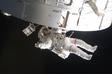
Former CU student Steve Swanson eads to the International Space Station for the third time.
Swanson, who earned a bachelor’s degree in engineering physics from CU-Boulder in 1983, will serve as flight engineer for Expedition 39, which already will be underway on the ISS when he arrives. In late May, Swanson, who considers Steamboat Springs, Colo., his hometown, will become space station commander as Expedition 40 begins.
Swanson will be launched to the ISS along with cosmonauts Alexander Skvortsov and Oleg Artemyev of the Russian Federal Space Agency.
“We’ve trained extensively and I’m confident I can do all of the tasks assigned to me on the space station,” Swanson said. “The difficult part is being away from my family and friends for a long period. I’ll miss them, but at the same time we will be very busy up there, which makes the time pass quickly.”
The astronaut crew will be involved in dozens of research experiments in the low gravity of the ISS, including efforts related to protein crystal growth, capillary blood flow, gravity sensing by plants and muscle and bone loss changes in space.
As part of his duties, Swanson will operate hardware developed by BioServe Space Technologies located in CU-Boulder’s aerospace engineering department to conduct two experiments on the space station, both being launched later this year. One led by Dr. Timothy Hammond of the Department of Veterans Affairs will use a yeast-based assay system to evaluate known and novel anti-cancer drug therapies in the low gravity of space. A second led by Professor Cheryl Nickerson of Arizona State University will evaluate host-pathogen interactions to better understand the risk of in-flight infections by space explorers during long-term missions.
Swanson previously flew on the STS-17 mission aboard the space shuttle Atlantis to the ISS in June 2007, then flew again on the STS-19 mission aboard Discovery in March 2009. Swanson spacewalked for more than 26 hours during the two missions and is tentatively slated for two more spacewalks during Expedition 39 and Expedition 40.
What does Swanson, whose two shuttle landings were on a smooth NASA runway in Florida, think about drifting by parachute in the Soyuz space capsule on the way from the space station back to Earth, eventually banging onto the ground in Kazakhstan? “I know this landing will be much more wild and exciting than a shuttle landing,” he said. “It is going to be a very different experience, and I’m looking forward to it.”
Swanson will be packing several CU mementos, including a T-shirt, a flag and a small piece of sandstone from the engineering center that has been engraved with a picture of Ralphie the Buffalo and an image of the International Space Station.
What does he recall about his time at CU-Boulder? “I remember waking up and seeing the mountains right there,” he said. “It was a beautiful thing, and helped me get going every day. I really liked CU-Boulder — it is a good school, with good professors — and I love to ski, I love to hike. I like the culture.”
His favorite times on the space station? “One of the best things is when you have a moment to yourself where you can just look out the window,” he said. Swanson also said he will spend what little free time he has emailing with family and friends back on Earth, blogging about his space station experiences and hopefully participating in a Google Hangout, sharing messages and photos and video-chatting with CU-Boulder students.
Eighteen CU-Boulder astronaut-affiliates have flown 47 NASA space missions beginning with Scott Carpenter in 1962.
Former NASA astronaut Jim Voss, who received his master’s degree in aerospace engineering sciences from CU-Boulder in 1974, currently is a CU-Boulder Scholar in Residence. Former NASA astronaut Joe Tanner currently is a senior instructor in aerospace engineering.
To watch a video of Swanson talking about his NASA experiences and his passion for Colorado’s outdoors visit http://www.youtube.com/watch?v=KU53X7O7z7w.
-CU-
Jan 3rd
NASA Television will provide live coverage of the launch of Orbital Sciences Corp.’s commercial Cygnus spacecraft on Tuesday, Jan. 7 from NASA’s Wallops Flight Facility in Virginia, which will be carrying two University of Colorado Boulder payloads to the International Space Station.
The two CU-Boulder payloads — a biomedical antibiotic experiment and an educational K-12 experiment involving ant behavior in microgravity — are slated to be launched aboard Orbital Sciences Corp.’s Antares rocket at 11:55 a.m. MST. Both experiments were designed by BioServe Space Technologies, a NASA-funded center in CU-Boulder’s aerospace engineering sciences department.

The CU-Boulder biomedical experiment was designed to test the effectiveness of antibiotics in space. Past experiments by CU-Boulder and other institutions have shown bacterial susceptibility to antibiotics is significantly reduced during spaceflight, although the reason is not yet known, said CU-Boulder Associate Professor David Klaus, principal investigator on the project.
Klaus said the investigation will examine changes in the gene expression of the bacteria E. coli during exposure to different concentrations of antibiotics while in the microgravity environment of space. The hope is to locate particular genes that are key to resisting antibiotics, which could lead to improved testing on Earth as well as new drug targets or new approaches to understanding antibiotic resistance in certain diseases or infections, said Klaus.
“Previous studies carried out in microgravity have shown that bacteria are able to grow in what normally would be an inhibitory concentration of the antibiotic,” said Klaus. “This investigation is aimed at characterizing the genetic basis for this response in the weightless environment of space with the intent of applying any insight gained toward combating the increasing emergence of drug-resistant pathogens here on Earth.”
Co-investigators on the project include BioServe Director Louis Stodieck, a research professor in aerospace engineering, and Shawn Levy, a researcher at the HudsonAlpha Institute for Biotechnology in Huntsville, Ala. The research effort also involves CU-Boulder doctoral candidate Luis Zea.
Bacterial resistance to antibiotics kills 100,000 Americans every year and represents a roughly $20 billion expense to the U.S. government in excess health care costs, said Klaus. The experiments will be undertaken using spaceflight test tubes contained in the Commercial Generic Bioprocessing Apparatus, or CGBA, an automated, suitcase-sized incubator, all designed and built by BioServe.
The second experiment launching to ISS is known as Ants in Space, which examines foraging patterns based on the density of the common Pavement Ant, said BioServe Business Development Manager and Education Program Director Stefanie Countryman. “Past experiments by Professor Deborah Gordon, principal investigator on this project, have shown that some ant species have the ability to search areas collectively without individual communication. When ant densities are high, each ant thoroughly searches one small area in a circular, “random” walk, she said. When ant densities are low, each ant searches by walking in a relatively straight line, allowing it to cover more ground.
“Ants assess their own density at the rate at which they meet,” said Countryman, who said the eight individual ant habitats on ISS will be loaded with roughly 100 ants each. “The experiment examines whether in microgravity ants will use the rate at which they meet to assess density, and so use straighter paths in the larger habitat areas. The results will be compared to ground controls, which in this case will include ant habitats in hundreds of K-12 classrooms around the world.”
Countryman has previously directed BioServe K-12 education experiments involving the behavior of butterflies, ladybugs and spiders in space, reaching hundreds of thousands of students around the world in the past two decades. For the ant experiments, BioServe is partnering with the Baylor College of Medicine’s Center for Education Outreach, a longstanding BioServe partner that has developed the education curriculum guide for the experiment.
BioServe research partners on the ant project include Gordon of Stanford University and Associate Professor Michael Greene of the University of Colorado Denver. The experiment is sponsored by NASA’s National Lab Education Office as well as the Center for the Advancement of Science in Space, a nonprofit group headquartered in Cape Canaveral, Fla.
Teachers interested in participating in the ant experiments may contact Countryman at countrym@colorado.edu. More information on the project for teachers and students will be online beginning in mid-January at http://www.bioedonline.org.
The flight will be the first Cygnus resupply cargo mission launched to ISS by Orbital Sciences Corp. and follows the earlier, successful launch of a Cygnus demo flight to ISS that arrived at the orbiting station Oct. 22.
In the past 25 years, BioServe has designed, built and flown microgravity life science research experiments on more than 40 space missions. BioServe has a full suite of space flight hardware, both on ISS and on the ground, which supports its own research as well as research conducted by its customers and partners. Past BioServe partners include large and small pharmaceutical and biotechnology companies, universities and NASA-funded researchers.
For more information on BioServe visit http://www.colorado.edu/engineering/BioServe/index.html.
-CU-
Sep 11th
The two winning experiments — one of which tests the ability of spiders to learn how to catch prey in the low-gravity of space, and the other which investigates how nutrients and compounds affect virulent bacteria growth in space — were announced in March. The contest is sponsored by YouTube, Lenova and Space Adventures with the involvement of NASA, the European Space Agency and the Japanese Space Agency.
“We took the ideas of the two winning experiments and transformed them into actual experiments that could be conducted in space,” said Stefanie Countryman, the business manager and outreach coordinator for BioServe Space Technologies, a NASA-sponsored center located in CU-Boulder’s aerospace engineering sciences department. The CU team also manifested the payload on an unmanned Japanese HTV rocket, conducted safety verifications and trained the astronaut flight crew on using BioServe hardware aboard the International Space Station, or ISS, for the project.
The global initiative sponsoring the contest is a new program known as YouTube Space Lab. YouTube Space Lab is one component of YouTube for Schools, a program that allows educators to access YouTube’s broad library of educational content from inside their school network. The contest generated more than 2,000 entries.
The student winners are Amr Mohamed, 18, of Alexandria, Egypt, who developed the idea for the spider experiment, and Dorothy Chen and Sara Ma, both 16, of Troy, Mich., who created the idea for the bacteria study. BioServe completed all of the mission integration and operations work for the two experiments and hand-delivered the loaded space flight hardware to the Tanegashima National Space Flight Center in Japan for launch to ISS on July 21.
The live, 45-minute YouTube Space Lab program stream from ISS, slated for 8:30 a.m. MDT on Sept. 13 will be hosted by Bill Nye “The Science Guy” and will include Mohamed, Chen and Ma. The winning experiments — selected by a panel that included British theoretical physicist Stephen Hawking, two NASA administrators, European Space Agency and Japanese Space Agency astronauts and Cirque de Soleil founder Guy Laliberte — will be performed by NASA astronaut Sunita Williams.
Countryman, who also will be part of the YouTube Space Lab live stream as she describes the role of BioServe in the project to Nye, said she was surprised by the sophistication of some of the experiments entered in the contest. “Seeing the level of intellect, not only from the top two winners but from six regional winners, makes us feel confident in the next generation of scientists and engineers,” she said.

Countryman said BioServe worked closely with Paula Cushing at the Denver Museum of Nature and Science and MaryAnn Hamilton of the Butterfly Pavilion in Westminster, Colo., to obtain the jumping spiders and analyze their behavior. BioServe designed, developed and built the flight habitat for the spiders. Once aboard ISS, the habitat will be placed inside a BioServe-built device known as a Commercial Generic Bioprocessing Apparatus, or CGBA.
In addition, BioServe worked with AgraQuest in Davis, Calif., a company that manufactures and sells the bacteria strain B. subtilis, which will be used in the experiment by Chen and Ma. BioServe researchers worked with the students to design the experiment, which included 48 fluid processing devices carried in six Group Activation Packs built by BioServe and which have flown on dozens of space missions.
BioServe also developed an HD camera system to record high-resolution still images and HD video of the spider habitat, which included both the arachnids and their food, fruit flies, Countryman said. One of BioServe’s CGBA devices on board ISS is providing power for the lighting system of the spider habitat and thermal control for both experiments, said Countryman.
As part of the contest, 14- to 18-year-olds, either alone or in groups of up to three, submitted videos describing their experiments to YouTube. All experiments submitted to the contest had to involve either biology or physics. People tuned into the YouTube Space Lab event can vote for their favorite experiments, Countryman said.
“For decades, one of our major thrusts at CU-Boulder’s BioServe Space Technologies has been to provide educational opportunities for hundreds of thousands of K-12 students around the world,” said Countryman. “This has been another opportunity for us to work with students on space payloads, a unique project that we hope will help steer many students from around the world into careers in the sciences.”
BioServe is a nonprofit, NASA-funded center founded in 1987 at CU-Boulder to develop new or improved products through space life science research in partnership with industry, academia and government, said BioServe Director Louis Stodieck. Since 1991 BioServe has flown payloads on 40 NASA space shuttle microgravity missions and additional payloads on several Russian and Japanese space vehicles.
YouTube, a video-sharing website, is a subsidiary of Google. Lenovo, a global company headquartered in Morrisville, N.C., is the world’s third-largest PC maker. Space Adventures, headquartered in Vienna, Va., provides flights for private citizens into space, including trips to the ISS.
To watch the winning experiments being performed on ISS go to http://www.youtube.com/spacelab. For more information on BioServe visithttp://www.colorado.edu/engineering/BioServe/.