








Mar 1st
Buffs Falter In 75-64 Pac-12 Loss
by B.G. Brooks
SALT LAKE CITY – For the Colorado men’s basketball team, the start of second halves has become the beginning of the end. The Buffaloes’ all-too-familiar script for failure played out again Saturday in a 75-64 Pac-12 Conference loss to Utah.
After a 30-30 halftime tie, the Utes outscored the Buffs 15-2 to open the second half and take a 45-32 lead. But that was a mere continuation of the last stages of the first 20 minutes. Over those final 4-plus minutes and the first 7-plus of the second half, Utah outscored its visitors from the other side of the Rockies 23-2.
And Senior Day at the Jon M. Huntsman Center was all but a wrap.
“Right now second halves are baffling when it comes to the Buffs,” coach Tad Boyle said. “This is three out of the last four games when you go back to UCLA . . . same way. They just had their way with us offensively in the second half – Arizona and now Utah. It happens once you think, OK, maybe somebody got hot, it’s an aberration. But it’s not . . . we’ve got to look at ourselves in the mirror and understand that right now we’re not good enough in the second half defensively.”
In an 88-61 home loss to No. 4 Arizona last weekend, the Buffs allowed the Wildcats to shoot 84.9 percent from the field in the second half. Saturday, the Utes made 70.8 percent of their second-half field goal attempts. Utah also outrebounded CU by three after losing the board battle by 18 in Boulder in the Buffs’ 79-75 overtime win.
Boyle called that a “big swing,” but pointed to porous defense as a culprit for even the slightest board advantage. “There’s not a lot of rebounds to be had,” he said. “That’s why it gets down to defense. When you’re taking the ball out of the next 70 or 85 percent of the time – holy cow, you better be making a lot of shots. I don’t think there’s an offense out there in college basketball to overcome those numbers.”
The Buffs (20-9, 9-7) closed to within nine points twice in the final 10 minutes Saturday but came no closer as the Utes (19-9, 8-8) improved to 18-2 at home this season. The Utes have now won 21 of 24 at the Huntsman Center dating to last season.
Jordan Loveridge and Delon Wright led Utah with 21 points each, while CU had two players in double figures – Josh Scott with 17 and Xavier Johnson with 10. Askia Booker finished with four points, a pair of first-half free throws and one field goal in the second half.
Freshman Dustin Thomas, who went scoreless in the teams’ first meeting last month in Boulder, hit a 3-pointer to open Saturday’s scoring and got CU’s first seven points as the Buffs took a 7-2 lead.
“I came out with confidence. I knew we had to jump on them early and I wanted to do what I could do for the team,” Thomas said.
CU led by as many as eight (30-22) before an 8-0 Utah run – courtesy of treys by Loveridge and Brandon Taylor – produced a 30-30 halftime tie. The Utes never led in the first half, and it was the first time this season the Buffs have been tied at intermission.
Then came another second-half swoon . . .
“We turned the ball over and we didn’t get stops. Those two things combined hurt; that’s the key to the second half,” Scott said, referring to CU’s five first-half turnovers and 11 in the second half. Utah converted those 16 miscues into 19 points.
Thomas said the Utes “just came out real aggressive” in the second half. “We didn’t come out and match their aggressiveness. We have to do that to every opponent we face; if we do that we’ll be all right. When we’re down we have to come together on the court instead of looking at each other.”
Another second-half failure, said Boyle, was not running the offense through Scott. Boyle said the Buffs might be understanding they have to play through Scott, not meaning that the 6-10 post must score on every possession, “But we have to play inside-out. When we do we’re pretty good. But the offensive struggles bleeding over into the defensive part of the floor has got to stop. We’re just not good enough defensively, though.”
CU finished the afternoon shooting 21-of-53 (39.6 percent) while Utah shot 59.6 percent from the field (28-of-47) – including the blistering 70.8 percent (17-of-24) in the final 20 minutes.
Among CU’s biggest first-half difficulties was finishing at the rim. The Buffs missed half a dozen point-blank attempts, enabling Utah to hold a 16-10 advantage in paint points and finish with a 38-22 advantage.
Booker finished the first half with only a pair of free throws and two fouls that sent him to the bench at the 7:12 mark. Also encountering first-half foul problems were Thomas and Johnson, who finished the game with four each.
Thomas said the early fouls on him, Booker and Johnson “hurt us a lot. We got up early in the first half and those fouls hurt. But we have to play through that.”
But with the score tied at 30 at intermission, the second 20 minutes (and the win) were there for the taking – and the Utes quickly took advantage. They scored the second half’s first nine points for a 39-30 lead. CU took a timeout to regroup with 17:26 to play, but promptly turned it over and Wright converted a traditional three-point play for the nine-point lead.
Scott called the turnovers “something we’ve talked about a lot. It’s inexcusable. We have to go back to the drawing board.” He also said Wright, the Pac-12 leader in steals, “got us a couple of times and made some easy baskets. I thought that was a key.”
CU finally got its first second-half points on a left-handed Scott hook with 16:20 left. But by then the Utes were up 39-32 and about to pull away for good.
Utah pushed its advantage to 45-32 on a straightaway 3-pointer by Loveridge with 13:52 to play and extended its lead to as many as 17 twice in the final 5 minutes.
Boyle said a lack of mental toughness continues to degrade the Buffs’ effort and that a glance at “every league in America” will show the top teams as the top defensive teams – and that’s where the Buffs are falling short.
“Our mental toughness – when things don’t go well for us on offense . . . it has to get better,” he said, adding a few corrections have to be made “to get it right. We don’t have to change the makeup . . . we’re not playing consistently enough and mentally tough enough.”
CU finishes out the regular season with road games next week at Stanford (Wednesday) and California (Saturday). The Pac-12 Tournament is March 12-15 in Las Vegas.

Feb 28th
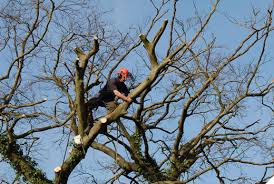
The City of Boulder Parks and Recreation Department’s Urban Forestry Division will be working with Ironwood Earthcare to conduct safety-related tree maintenance along the Boulder Creek Path from Monday, March 3, to Thursday, March 6, and again on Tuesday, March 25. The work will require temporary closures of the Boulder Creek Path, and flaggers will be onsite to direct pedestrian and bicycle traffic around work zones.
Monday, March 3:
8 a.m. to 4 p.m. – temporary closures will be along the dirt trail south of the Justice Center, located at 1777 6th St.
Tuesday, March 4:
8 a.m. to 2 p.m. – temporary closures will be near the Evert Pierson Kids’ Fishing Pond, located at 6th Street and Canyon Boulevard.
2 to 4 p.m. – temporary closures will be near the Sculpture Park at 9th Street and Canyon Boulevard.
Wednesday, March 5:
8 to 11 a.m. – temporary closures will be near the Main Public Library, located at 1001 Arapahoe Ave.
11 a.m. to 3:30 p.m. – temporary closures will be near Central Park and Connecting Point Park, located at 13th Street and Arapahoe Avenue.
Thursday, March 6:
8 a.m. to 2 p.m. – temporary closures will be west of 17th Street along the Boulder Creek Path.
2 to 4 p.m. – temporary closures will be east of Folsom Street along the Boulder Creek Path.
Tuesday, March 25:
8 a.m. to 4 p.m. – temporary closures will be near Boulder High School, 1604 Arapahoe Ave., from 13th to 17th streets.
Please note, all tree maintenance project dates and times are weather-dependent and subject to change. For more information, call Patrick Bohin, parks and recreation department’s urban forester, at 303-519-8750.
–CITY–

Feb 27th
A new study led by the University of Colorado Boulder bolsters the theory that the first Americans, who are believed to have come over from northeast Asia during the last ice age, may have been isolated on the Bering Land Bridge for thousands of years before spreading throughout the Americas.
The theory, now known as the “Beringia Standstill,” was first proposed in 1997 by two Latin American geneticists and refined in 2007 by a team led by the University of Tartu in Estonia that sampled mitrochondrial DNA from more than 600 Native Americans. The researchers found that mutations in the DNA indicated a group of their direct ancestors from Siberia was likely isolated for at least several thousand years in the region of the Bering Land Bridge, the now-submerged plain that lies between northeast Asia and Alaska once exposed by a significantly lower sea level.
CU-Boulder researcher John Hoffecker, lead author of a short paper article appearing in the Feb. 28 issue of Science magazine, said the Beringia Standstill model gained little traction outside of the genetics community after it was proposed and has been seen by some scientists outside of the field as far-fetched. But the new paper by Hoffecker and co-authors Scott Elias of Royal Holloway, University of London, and Dennis O’Rourke of the University of Utah adds credence to the Beringia Standstill idea by further linking the genetics to the paleoecological evidence.
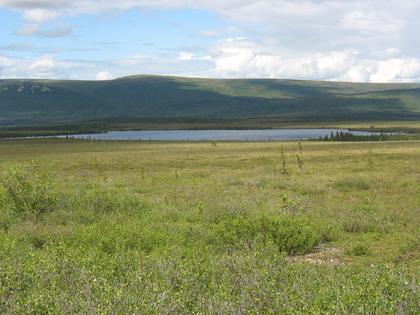
The Beringia Land Bridge was relatively temperate during the last ice age
“A number of supporting pieces have fallen in place during the last decade, including new evidence that central Beringia supported a shrub tundra region with some trees during the last glacial maximum and was characterized by surprisingly mild temperatures, given the high latitude,” said Hoffecker of CU-Boulder’s Institute of Arctic and Alpine Research. The last glacial maximum peaked roughly 21,000 years ago and was marked by the growth of vast ice sheets in North America and Europe.
While a debate rages on about when early humans first migrated into the New World, many archaeologists now believe it was sometime around 15,000 years ago after retreating glaciers opened access to coastal and interior routes into North America.
The relatively mild summer climate in Beringia at the time was caused by North Pacific circulation patterns that brought moist and relatively warm air to the region during the last glacial maximum. Geologists believe the Beringia gateway between Siberia and Alaska was more than 600 miles wide at the time.
Hoffecker and others are now theorizing that a population of hundreds or thousands of people parked itself in central Beringia for 5,000 years or more. One key to the extended occupation may have been the presence of wood in some places to use as a fuel to supplement bone, which burns hot and fast. Experiments have shown that at least some wood is necessary to make bone practical as a fuel.
Elias, a paleoecologist and also an INSTAAR affiliate, said research using fossil pollen, plant and insect material from sediment cores from the now submerged landscape show that the Bering Land Bridge tundra environment contained enough woody plants and trees like birch, willow and alder to provide a supplement to bone.
Work by Elias and others included the analysis of certain beetle species that live in very specific temperature zones, allowing them to be used as tiny thermometers. The insects indicated that temperatures there were relatively mild during last glacial maximum that ran from about 27,000 years to 20,000 years ago, only slightly cooler than temperatures in the region today.
“The climate on the land bridge and adjacent parts of Siberia and Alaska was a bit wetter than the interior regions like central Alaska and the Yukon, but not a lot warmer,” said Elias. “Our data show that woody shrubs were available on the land bridge, which would have facilitated the making of fires by the people there.”
Evidence from the 2007 study indicated a set of genetic mutations in mitochondrial DNA, which is passed down from mother to offspring, clearly accumulated after the divergence of people from their Asian parent groups in Siberia but before their dispersal throughout the Western Hemisphere, said O’Rourke. In addition, ancient DNA from human skeletal remains found at a 24,000-year-old archaeological site in southern Siberia also appears consistent with the divergence of Native American groups from their Asian forbearers by that time window, he said.
“The genetic record has been very clear for several years that the Native American genome must have arisen in an isolated population at least by 25,000 years ago, and the bulk of the migrants to the Americas really didn’t arrive south of the ice sheets until nearly 15,000 years ago,” O’Rourke said. “The paleoecological data, which I think most geneticists have not been familiar with, indicate that Beringia was not a uniform environment, and there was a shrub tundra region, or refugium, that likely provided habitats conducive to continuous human habitation.”
“From my view the genetics and paleoecology data come together nicely,” said Hoffecker, who co-authored a 2007 book with Elias titled “The Human Ecology of Beringia.” While the weakest link to the Out of Beringia theory is the lack of archaeological evidence, Hoffecker believes future research on now submerged parts of Beringia as well as lowlands in western Alaska and eastern Siberia that still remain above water may hold clues to ancient habitation by Beringia residents, who eventually moved on to be the first group to inhabit the Americas.
Hoffecker also believes that the Beringia inhabitants during the last glacial maximum could have made successful hunting forays into the uninhabited steppe-tundra region to both the east and west, where drier conditions and more grass supported a plentiful array of large grazing animals, including steppe bison, horse and mammoth.
There is now solid evidence for humans in Beringia before the last glacial maximum, as geneticists first predicted in 1997, said Hoffecker. After the maximum, there are two sets of archaeological remains dating to less than 15,000 years ago. “One represents a late migration from Asia into Alaska at that time,” he said. “The other has no obvious source outside Beringia and may represent the people who are thought to have sheltered on the land bridge during the glacial maximum.
“If we are looking for a place to put all of these people during the last glacial maximum, Beringia may be the only realistic option,” said Hoffecker.
A video news story on the research is available at http://www.colorado.edu/news.
-CU-