







Jan 11th
As a new year and the spring semester begin, the University of Colorado Boulder is welcoming the first class of journalism students entering under a new undergraduate degree structure called “Journalism Plus” that CU officials say will create better journalists, better news content and, over time, a more informed society.Currently, more than 45 new students are expected to enroll for spring semester under the new Journalism Plus requirements. Journalism Plus stipulates that students supplement their journalism degree requirements with an additional field of study in a specific arts and sciences discipline, an approach that Journalism Director Chris Braider says will make better journalists and communication professionals, better university students and better citizens.

“Journalism Plus ensures that the journalists and communicators CU produces will not only possess the updated skills they need to create and deliver messages, but will also possess the analytical abilities, research tools and knowledge of a subject to communicate something of value in those messages,” Braider said.
Carl Bernstein and Bob Woodward–the
“old” journalism?
“Our students will understand, with depth and context, the content they will create as journalists. We think this will set them apart from other journalism programs across the nation.”
Journalism and Mass Communication will continue to grant the Bachelor of Science degree in one of five sequences: advertising, broadcast news, broadcast production, media studies and news-editorial. Under the new requirements, students also will enroll in a 30- to 33-credit-hour additional field of study, the equivalent of work in a major in a discipline of their choice — anything from English, physics and history to political science, environmental studies or film studies.
Students admitted prior to spring 2012 have until May of 2016 to earn a degree under the former requirements, or they can elect to complete the Journalism Plus degree requirements.
The changes, say CU-Boulder Provost Russell L. Moore, were deliberate and in line with CU’s larger goals for its students.

“We want CU-Boulder students to be both knowledgeable and engaged in the world they live in,” said Moore. “So the goal for us was never to make journalism go away, but to pair it with a discipline that would add the depth of knowledge of a liberal arts degree to the skills developed in a journalism curriculum.
Lyndsay Lohan is news? Who decides?
I think this is going to answer a call we’ve heard from media professionals — don’t just send us skilled graduates, send us graduates who can interpret and understand the information they gather with some depth and context.”
At a practical level, Braider says, this will mean better, more contextual reporting to inform and shape our democratic society.
“In this model, science writers will possess first-hand knowledge of the sciences they report on,” Braider said. “Reporters covering government or business will bring an in-depth knowledge of political science and economics to the events they chronicle. Advertisers and graphic designers will explore the full range of expressive arts on which their professions rely.”
As Journalism Plus is implemented, more students will be admitted directly to Journalism and Mass Communication as freshmen.
The university is continuing on a path to creating a new interdisciplinary college or school of information, communications, journalism, media and technology, which will one day house journalism and companion disciplines in an environment of sharing, innovation and scholarship.
Journalism and Mass Communication continues to be accredited by the Accrediting Council on Education for Journalism and Mass Communications. In two years, the accrediting council will make a determination on accreditation for the following four years.
Dec 18th
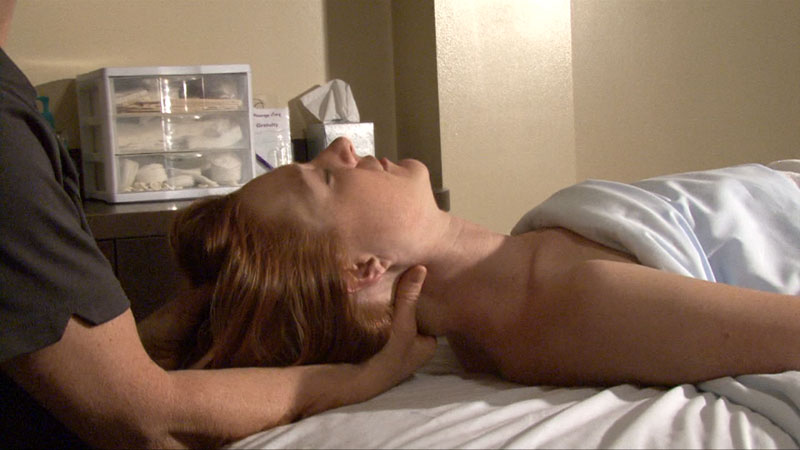
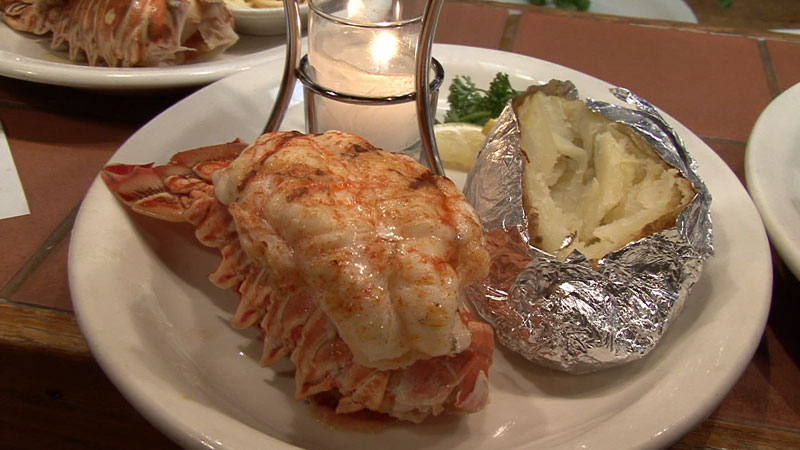
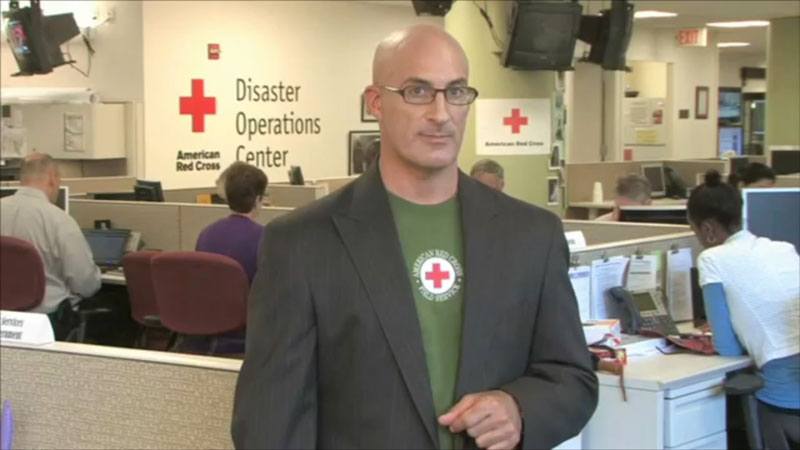
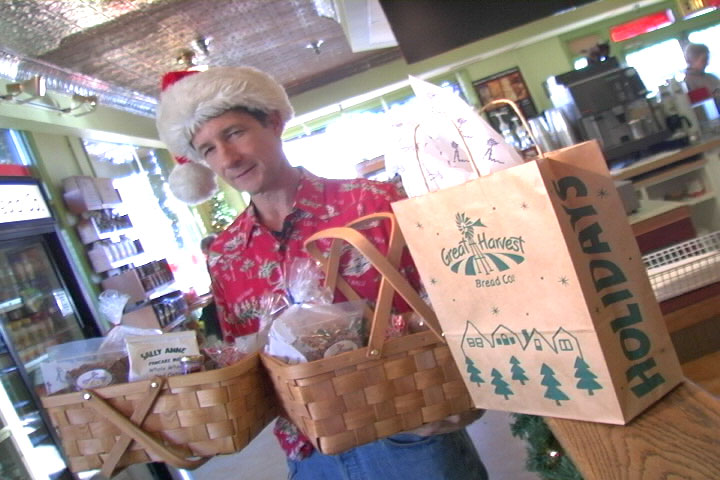
It’s 22 Boom’s third Holiday Special for 2011 where we visit lots of fun and exciting events and places as well we help support local and national charities in their drives to help those in need in this season of giving. This episode has holiday candy, music, food, events, movies, and winter fun and fitness.

















Dec 13th
After two years of working in a University of Colorado Boulder laboratory that recently gained international media attention for its work with snakes and heart disease, graduating senior Ryan Doptis has set his sights on becoming a research scientist.
Doptis, a molecular, cellular and developmental biology major from Las Vegas, will graduate on Dec. 16. He has worked the past two years in the laboratory of CU-Boulder Professor Leslie Leinwand, the chief scientific officer of CU’s Biofrontiers Institute.
“At CU-Boulder I’ve had a lot of opportunities when it comes to getting real-world experience,” Doptis said. “After two years of going through the molecular biology program, I decided I wanted to try lab work. And I really wanted to do meaningful research that wasn’t the same cookie-cutter experiment every semester.”
He found a perfect fit working in the laboratory of Leinwand, who is an expert in genetic heart diseases including hypertrophic cardiomyopathy, the leading cause of sudden death in young athletes. Doptis’ work involves both cardiovascular and metabolic responses to eating conducted in a very unusual animal model – the Burmese python..
The research opportunity has been very fulfilling, he said, because he enjoys working with snakes and studying how they can provide insight into new ways to think about and treat some of the most serious medical problems people face, such as heart disease.
One of the things the Leinwand lab is investigating is the process by which a Burmese python’s heart size drastically increases after a gigantic meal. A python’s meal can often be 25 to 100 percent of its own body weight.
“What our research focuses on is in those few days when the snake is digesting the meal, they ramp up their metabolic rate by fortyfold,” Doptis said. “In doing that, their heart and their liver are able to get 50 to 100 percent larger than they are at a resting state. And after they digest their meal, they actually drop those organs back down to their resting size.”
A lot of the research in the lab centers around how the pythons’ heart size can change so quickly without ill side effects. Answering that question could someday lead to medical breakthroughs in the area of treating heart disease, which is the leading cause of death in the United States. When people develop certain types of heart disease, they develop something called cardiac hypertrophy, which means their heart gets enlarged. Once that happens, it’s irreversible.
“These snakes are able to increase the size of their hearts, and then shrink the size of their hearts after every meal,” Doptis said. “We’re trying to understand the mechanism of how that can apply to possibly bring down the size of a human heart that has become enlarged.”
As part of his work in the lab, Doptis applied for and received a research grant from the Howard Hughes Medical Institute to help fund some of the python research he was working on.
“I designed an experiment and completely conducted that experiment myself, and was funded by Howard Hughes Medical Institute for that experiment,” he said. “I don’t think that’s something you can find at every university.”
Once he graduates, Doptis plans to go to graduate school and work on a doctorate degree that involves lab work.
“The experience I’ve had here will be invaluable when I enter graduate school, because I know my way around a lab, I know how to work a lot of the equipment and I’ve learned how good experimental design is done,” he said