









Feb 6th
Rangers responded to:
• A report of an injured on the Baseline Trail. The hiker slipped on the ice, attempted to brace herself with her arms and potentially broke her right wrist. Rangers worked with both Boulder Fire and AMR on this call.
• A report of a suicidal party in the Flagstaff area. The suicidal party stated that he wanted to jump off of one of the Flatirons to his Dad who then called 911. Rangers working with BCSO to find the party at Crown Rock and helped with his arrest and transport to hospital.
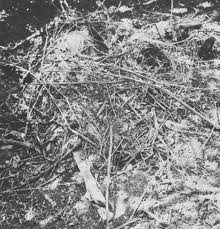
mountain lions bury prey and return to it often to feed
• A report of a mtn lion cache in the area of 800 Willowbrook. Mtn lion was seen pawing the home owners sliding glass door. Rangers worked with CPW on this call.
• A report of an injured hiker on the Mesa Trail who had slipped and fell on the ice, hitting his head. Rangers worked with Boulder Fire on this call.
• A report of a vehicle fire at Cathedral Park. The fire started because of an electrical issue with the car. Rangers worked with Boulder Fire and Denver Water on this call.
• A report of a hiker getting kicked in the head by a cow at the North Teller Trailhead.
The hiker saw a cow giving birth and thought it was in distress and went over to look and help. The cow promptly kicked her, loosening some of the hiker’s teeth.
• A report of an active criminal trespass happening off of Eldorado Springs Dr. OSMP Rangers were first to respond and detained the suspect. The suspect, later identified as Senator Mark Udall’s son, had broken into three vehicles and stolen a small amount of cash. The suspect was arrested and drug paraphernalia was found to be in his possession.
• A wildfire at Buckingham Picnic area. The fire started in a logjam and heavy equipment had to be used to get to the interior of the fire. Jay Jones brought in a backhoe to help clear the debris. Rangers worked with Lefthand Fire on this call, it is unknown how this fire was started.
• A report of an injured sledder at Chautauqua, Rangers worked with AMR on this call.

Feb 6th
Written By B.G. Brooks, CUBuffs.com Contributing Editor
BOULDER – The Colorado Buffaloes and junior guard Askia Booker opened the second half on the run and appeared ready to race past Washington State on Wednesday night. Not so fast, said the Cougars’ DaVonte Lacy.
The Buffs held on – far from tightly – for a 68-63 Pac-12 Conference win that was secured – but barely – at the foul line in the final 1:05. CU hit only 8 of 14 free throws during that span, but Booker’s 6 of 8 – including a pair with 2 seconds remaining – kept the Buffs afloat.
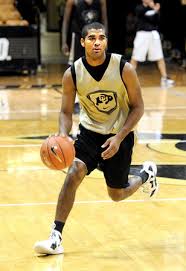
Xavier Talton is the new Buffalo point guard
“A win’s a win,” said CU coach Tad Boyle, “especially in conference play. But it was not pretty, especially at the end. Obviously we have to finish better and that puts a bit of a damper on this win.”
With Lacy hitting 21 of his game-high and career-high 34 points in the second half – including five of his eight 3-pointers – WSU cut a 19-point CU lead to three (66-63) before Booker’s final pair of foul shots.
“We had a 19-point lead and gave it up,” said Booker, whose 26 points Wednesday night was one off his career high. “We took it down to the last second. We can’t let it get to that point. It seemed like we didn’t have enough energy towards the end and we can’t do that Sunday because that team is a lot better and will come in and finish us off.”
“That team” is Washington, which defeated CU 71-54 in Seattle last month and visits the Coors Events Center Sunday at 6 p.m.
Booker scored 15 of his total as the Buffs (17-6, 6-4) increased a three-point halftime lead to 50-33 with 8:25 to play, then to 54-35 less than 2 minutes later. But Lacy, who didn’t play in CU’s 71-70 overtime win in Spokane on Jan. 8, and the Cougars (9-13, 2-8) roared back with their shooting behind the arc.
They attempted 15 treys in the second half, hitting nine of them (60 percent) and finishing 13-of-27 for the game (48.1 percent). The Cougars’ 13 made 3-pointers tied their total in the first meeting and Elon’s output for the most by a CU opponent this season.
Boyle said the Buffs defended Que Johnson well (he made 2 of 11 field goals and finished with eight points) but faltered on Lacy. “Not so much on him,” Boyle said. “When you’re eight for 13 on threes, that’s not good enough (defense).”
CU’s Xavier Johnson backed up Booker with 20 points – they were the only two Buffs in double figures – and Johnson’s nine rebounds and Wesley Gordon’s 10 picked up the slack for a sub-par Josh Scott. CU’s leading scorer (14.4 ppg) and rebounder (9.1 rpg) didn’t get his first point or board until the game’s final half minute.
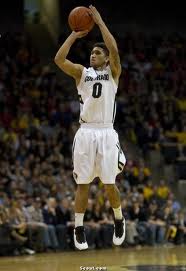
“Ski” Booker scored 26 points in Buff win
“Give Washington State credit,” said Boyle, “their game plan was double him every time he touched the ball. They did and they were on him quickly.”
The Buffs improved their home record to 14-1 this season and 58-8 at the CEC under Boyle. The 14 ‘W’s this season tie for the fourth-most home wins in program history.
The Buffs led 23-20 at halftime, but it was a weird, disjointed journey to that meager advantage.
Neither team sizzled from the field in the first 20 minutes; CU shot 39 percent, WSU 40. At one point, the Buffs went 6:32 between field goals. And at 13-13, there wasn’t a first-half rebounding edge – forever a point of contention for Boyle. CU wound up winning the board battle 32-28 and shot 48.1 percent in the second to finish at 44 percent (22-of-50). The Buffs committed what Boyle called a “manageable” 12 turnovers while turning 17 Cougars errors into 14 points.
After the Cougars took a 7-6 lead, the Buffs appeared to take control with a 9-0 run that opened their largest margin of the half – 15-7.
Jaron Hopkins opened the run with a trey from the left corner and George King closed it with a short pull-up jumper. Then the Buffs went stagnant offensively, not getting their next field goal for just over 61/2 minutes.
For the first time in five games, Hopkins didn’t start. He was replaced by Xavier Talton, but the sophomore from Sterling picked up two quick fouls and went to the bench only 2:28 into his first career start.
While CU was muddling through its offense, WSU capitalized, mainly on the shooting of Lacy. The 6-4 junior brought the Cougars back by scoring eight of his 13 first-half points in the final 5:47.
The Buffs outscored the Cougars 11-3 to open the second half, with Booker going to the rim and getting 10 of those points. CU opened its first double-digit lead of the game – 34-23 – with 16:01 remaining.
“Coach just told me to be aggressive,” Booker said. “I had to pick and choose my spots . . . I got to the basket and got some easy buckets in transition.”
Three consecutive 3-pointers by Talton, Booker and Dustin Thomas opened a 50-33 lead 8 1/2 minutes to play, but the Cougars kept shooting treys and hitting them.
“Lacy got open way too many times,” Booker said. “It came down to a three-point game and whether it be one man or three people that’s hot on their team, we have to find a way to win the game. And thank God we made those free throws at the end to hold them off.
“But at the same time you can’t let an individual come in here, especially on the road, and let him take over and keep his team in the game.”
The Buffs have until Sunday to figure out how to do that. UW’s C.J. Wilcox scored 31 on the Buffs, hitting seven treys, in the meeting in Seattle.

Feb 6th
WAIKOLOA, Hawai’i — The University of Colorado men’s golf team arrived here Saturday in preparation for its spring opener, the 24th annual Amer Ari Hawaii-Hilo Invitational.
The tournament, which runs this Thursday through Saturday, will once again provide an indication of where the Buffaloes stand right out of the gate, not just nationally, but with seven other Pac-12 schools competing, the Buffs will get an early idea of where they stand in the conference.
The field here is annually one of the strongest in the spring, and it’s no exception this year with three top 10 teams competing and 10 of the top 50 and all but two (out of 17) in the top 100. It also includes 10 of the nation’s top 30 individuals and the No. 7 Division II program in CSU-Monterey Bay.
Colorado (No. 83 in the final Golfweek fall rankings), will be joined in the field by league counterparts Stanford (No. 9), Washington (No. 13), UCLA (No. 17), Southern California (No. 25), Arizona State (No. 37), Oregon (No. 60) and Oregon State (No. 67). Other top schools competing include No. 2 Georgia Tech, No. 3 Oklahoma State, No. 19 Texas and No. 26 Auburn.

Waikoloa King’s Course
The three-day tournament is a real treat for the participants, as the tournament will be played on the renowned 7,074-yard, par-72 Waikoloa King’s Course on Hawai’i’s Big Island, a Scottish links-style layout with fairways interspersed between ancient lava fields, along with numerous lakes and pot bunkers. The teams will play 18 holes each day in a shotgun start format at 10:30 a.m. MST in weather expected to be near-perfect with temperatures in the low 80s.
Colorado head coach Roy Edwards said the team is looking forward to the spring season getting underway.
“This tournament annually has a great field, and it’s always really exciting,” Edwards said. “It’s been just over three months since our last tournament and we’re ready to get our spring season going. We’ve had some solid days of practice out here, which we were in need of considering the weather back home. If we take care of business and play the way we’re capable, we’re confident that we can beat some really good teams.”
Six Buffaloes are on trip; five will score for the team: junior David Oraee (73.9 fall stroke average) sophomore Philip Juel-Berg (73.5) and three true freshmen: Jeremy Paul (72.9), Yannik Paul (72.5) and Andrew Bonner (77.7). Oraee, Juel-Berg and Jeremy Paul played in all five competitions, while Yannik Paul appeared in four and Bonner two. Senior Johnny Hayes (74.4) will play as an individual.
DAVID PLATI | ASSOCIATE AD/SPORTS INFORMATION