








Nov 26th
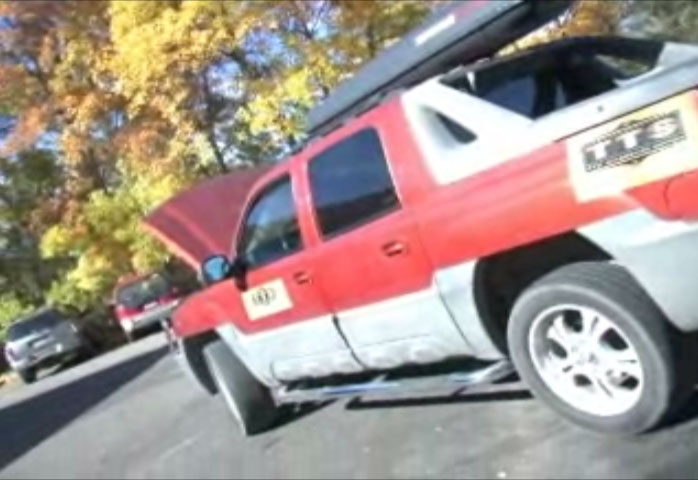
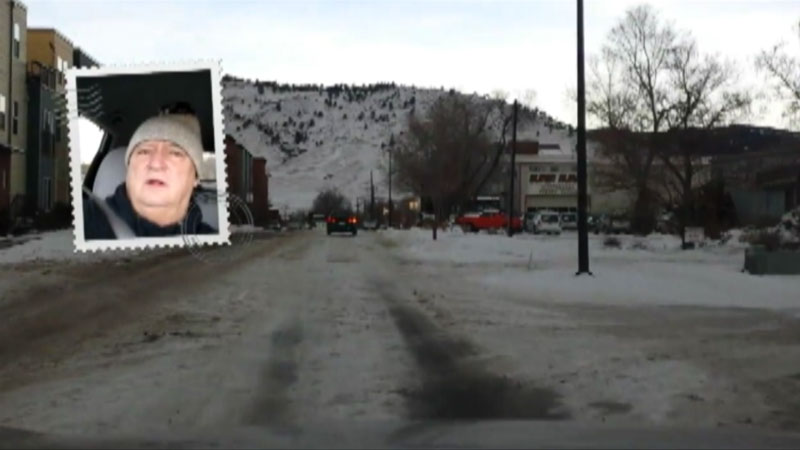
It’s almost Turkey Day and and 22 brings us some things to be thankful about and others we could help with. The Boulder Bridge House, Farmers Market, Boulder Office of Arts and Culture, Jann Scott Live covers the Worst Intersection in Boulder, Pearl Street Kiosks, and the Boulder Courthouse Fountain. The Aaron covers the Great American Beer Fest and Jena Latham shows us how to make Butternut Squash Soup. We also revisit the Flower Bin’s Christmas Open House, the Boulder Homeless Shelter, the Rocky Mountain Cigar Fest, TTS Winter Auto Prep Tips, Keithbar Pedal Straightener, Freezing Homeless in Boulder, Boulder Drivers in the Snow, and the 3 Minute Gourmet Bananas Foster recipe, and we wrap up the show with a little blues and President Obama pardoning the White House Turkey. All in this Thanksgiving Special of 22 Boom on Boulder Channel 1 and BV-22.



















Mar 4th
http://youtu.be/IDt3a21sa-g
Population Size Declines In southern portions of their range, like Hudson Bay, Canada, there is no sea ice during the summer, and the polar bears must live on land until the Bay freezes in the fall, whereupon they can again hunt on the ice. While on land during the summer, these bears eat little or nothing. In just 20 years the ice-free period in Hudson Bay has increased by an average of 20 days, cutting short polar bears’ seal hunting season by nearly three weeks. The ice is freezing later in the fall, but it is the earlier spring ice melt that is especially difficult for the bears. They have a narrower timeframe in which to hunt during the critical season when seal pups are born.
As a result, average bear weight has dropped by 15 percent, causing reproduction rates to decline. The Hudson Bay population is down more than 20 percent. Retreating Sea Ice Platforms The retreat of ice has implications beyond the obvious habitat loss. Remaining ice is farther from shore, making it less accessible. The larger gap of open water between the ice and land also contributes to rougher wave conditions, making the bears’ swim from shore to sea ice more hazardous. In 2004, biologists discovered four drowned polar bears in the Beaufort Sea, and suspect the actual number of drowned bears may have been considerably greater. Never before observed, biologists attributed the drowning to a combination of retreating ice and rougher seas.
Scarcity of Food Exacerbating the problems of the loss of hunting areas, it is expected that the shrinking polar ice cap will also cause a decline in polar bears’ prey — seals. The reduction in ice platforms near productive areas for the fish that the seals eat affects their nutritional status and reproduction rates. Polar bears are going hungry for longer periods of time, resulting in cannibalistic behavior. Although it has long been known polar bears will kill for dominance or kill cubs so they can breed with the female, outright predation for food was previously unobserved by biologists. Polar Bear Status In 2008, the polar bear was listed as a threatened species under the Endangered Species Act primarily because of the decline of its primary habitat: sea ice. The Secretary of Interior listed the polar bear as threatened but restricted the Endangered Species Act’s protections and thus the polar bear’s future is still very much in jeopardy. The polar bear is the proverbial “canary in the coal mine” of the serious threat global warming poses to wildlife species around the world, unless we take immediate and significant action to reduce global warming pollution.
Jul 21st
In fact, two CU-Boulder researchers say all that may have been required to sustain liquid water and primitive life on Earth during the Archean eon 2.8 billion years ago were reasonable atmospheric carbon dioxide amounts believed to be present at the time and perhaps a dash of methane. The key to the solution was the use of sophisticated three-dimensional climate models that were run for thousands of hours on CU’s Janus supercomputer, rather than crude, one-dimensional models used by almost all scientists attempting to solve the paradox, said doctoral student Eric Wolf, lead study author.

“It’s really not that hard in a three-dimensional climate model to get average surface temperatures during the Archean that are in fact moderate,” said Wolf, a doctoral student in CU-Boulder’s atmospheric and oceanic sciences department. “Our models indicate the Archean climate may have been similar to our present climate, perhaps a little cooler. Even if Earth was sliding in and out of glacial periods back then, there still would have been a large amount of liquid water in equatorial regions, just like today.”
Evolutionary biologists believe life arose on Earth as simple cells roughly 3.5 billion years ago, about a billion years after the planet is thought to have formed. Scientists have speculated the first life may have evolved in shallow tide pools, freshwater ponds, freshwater or deep-sea hydrothermal vents, or even arrived on objects from space.
A cover article by Wolf and Toon on the topic appears in the July issue of Astrobiology. The study was funded by two NASA grants and by the National Science Foundation, which supports CU-Boulder’s Janus supercomputer used for the study.
Scientists have been trying to solve the faint young sun paradox since 1972, when Cornell University scientist Carl Sagan — Toon’s doctoral adviser at the time — and colleague George Mullen broached the subject. Since then there have been many studies using 1-D climate models to try to solve the faint young sun paradox — with results ranging from a hot, tropical Earth to a “snowball Earth” with runaway glaciation — none of which have conclusively resolved the problem.
“In our opinion, the one-dimensional models of early Earth created by scientists to solve this paradox are too simple — they are essentially taking the early Earth and reducing it to a single column atmospheric profile,” said Toon. “One-dimensional models are simply too crude to give an accurate picture.”
Wolf and Toon used a general circulation model known as the Community Atmospheric Model version 3.0 developed by the National Center for Atmospheric Research in Boulder and which contains 3-D atmosphere, ocean, land, cloud and sea ice components. The two researchers also “tuned up” the model with a sophisticated radiative transfer component that allowed for the absorption, emission and scattering of solar energy and an accurate calculation of the greenhouse effect for the unusual atmosphere of early Earth, where there was no oxygen and no ozone, but lots of CO2 and possibly methane.
The simplest solution to the faint sun paradox, which duplicates Earth’s present climate, involves maintaining roughly 20,000 parts per million of the greenhouse gas CO2 and 1,000 ppm of methane in the ancient atmosphere some 2.8 billion years ago, said Wolf. While that may seem like a lot compared to today’s 400 ppm of CO2 in the atmosphere, geological studies of ancient soil samples support the idea that CO2 likely could have been that high during that time period. Methane is considered to be at least 20 times more powerful as a greenhouse gas than CO2 and could have played a significant role in warming the early Earth as well, said the CU researchers.
There are other reasons to believe that CO2 was much higher in the Archean, said Toon, who along with Wolf is associated with CU’s Laboratory for Atmospheric and Space Physics. The continental area of Earth was smaller back then so there was less weathering of the land and a lower release of minerals to the oceans. As a result there was a smaller conversion of CO2 to limestone in the ocean. Likewise, there were no “rooted” land plants in the Archean, which could have accelerated the weathering of the soils and indirectly lowered the atmospheric abundance of CO2, Toon said.
Another solution to achieving a habitable but slightly cooler climate under the faint sun conditions is for the Archean atmosphere to have contained roughly 15,000 to 20,000 ppm of CO2 and no methane, said Wolf. “Our results indicate that a weak version of the faint young sun paradox, requiring only that some portion of the planet’s surface maintain liquid water, may be resolved with moderate greenhouse gas inventories,” the authors wrote in Astrobiology.
“Even if half of Earth’s surface was below freezing back in the Archean and half was above freezing, it still would have constituted a habitable planet since at least 50 percent of the ocean would have remained open,” said Wolf. “Most scientists have not considered that there might have been a middle ground for the climate of the Archean.
“The leap from one-dimensional to three-dimensional models is an important step,” said Wolf. “Clouds and sea ice are critical factors in determining climate, but the one-dimensional models completely ignore them.”
Has the faint young sun paradox finally been solved? “I don’t want to be presumptuous here,” said Wolf. “But we show that the paradox is definitely not as challenging as was believed over the past 40 years. While we can’t say definitively what the atmosphere looked like back then without more geological evidence, it is certainly not a stretch at all with our model to get a warm early Earth that would have been hospitable to life.”
“The Janus supercomputer has been a tremendous addition to the campus, and this early Earth climate modeling project would have impossible without it,” said Toon. The researchers estimated the project required roughly 6,000 hours of supercomputer computation time, an effort equal to about 10 years on a home computer.
-CU-
[includeme src=”http://c1n.tv/boulder/media/bouldersponsors.html” frameborder=”0″ width=”670″ height=”300″]