







This is news from the city of Boulder, about the city or any of its departments

Jul 22nd
Congressman Joe Neguse It was another chaotic few days in Washington last week as House Republicans pushed for a vote to cut funding — already approved by Congress — for public radio stations in rural America, critical national security programs, and more. These rescissions are reckless and will have a devastating impact for the country, and I was proud to work late into the night on Thursday to push back against this effort.
Banning Stock Trading
As part of a larger effort I’ve been leading to end corruption in Washington D.C., including banning Members of Congress from trading stocks and strengthening anti-corruption laws, last week I introduced a bill with my colleague Congresswoman Alexandria Ocasio-Cortez to impose a lifetime ban on former Members of Congress from becoming lobbyists and strengthening lobbying transparency law.
Funding cut for NPR and PBS It was another chaotic few days in Washington last week as House Republicans pushed for a vote to cut funding — already approved by Congress — for public radio stations in rural America, critical national security programs, and more. These rescissions are reckless and will have a devastating impact for the country, and I was proud to work late into the night on Thursday to push back against this effort.
Jenny Robins running for Boulder CC again. Join me on Thursday, August 7, from 5:00 to 6:30 p.m. in Boulder to celebrate the official start of the campaign. There will be food, drinks, and music, and I’d love to see you there. The address will be shared upon RSVP and again 24 hours before the event.
Boulder Channel One now has a news feed on Next door. Please tell us if its working and how you like it. we have a lot of reader on ND

Mar 17th
Boulder, Colo– On March 22, 2021, Boulder lost 10 community members, including a Boulder police officer, in a mass shooting. The City of Boulder remains committed to creating a space to honor and remember those who lost their lives that day, and to offer support to all who need it. 
“March 22 will always be a day for reflection in Boulder. It will always be a day to remember the lives that were cut short and to support those who lost their loved ones far too soon,” said City of Boulder Mayor Aaron Brockett. “We will continue to honor all who were impacted on that day and to celebrate the lives of those we lost.”
The community is invited to join the city, the District Attorney’s Office, the Museum of Boulder and Clinica Family Health & Wellness at this year’s Day of Remembrance gathering and moment of silence.
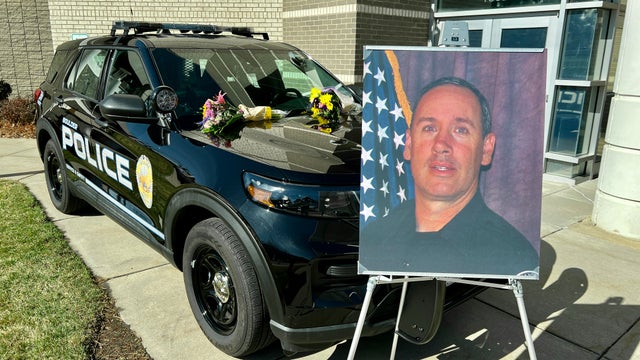
Community members who are experiencing trauma related to the mass shooting on March 22, 2021 are welcome to visit the Boulder Strong Resource Center at 2935 Baseline Road in Boulder. The center offers a place of healing and support for those impacted by the tragedy. The center is open to all and is staffed by knowledgeable, compassionate and caring professionals from Clinica Family Health & Wellness.

Mar 15th
Megan Trussell’s body was discovered on February 15, 2025, near the 40-mile marker of Boulder Canyon Drive, days after she was reported missing by the CU Boulder Police Department. The Boulder County Sheriff’s Office has since led the investigation, but with the cause and manner of death still undetermined by the coroner’s office, the lack of concrete updates has fueled frustration among the subreddit’s 356 subscribers. What started as a community seeking answers has devolved into a breeding ground for distrust and speculation, raising eyebrows both locally and online. Posts on r/MeganTrussell have grown increasingly hostile toward law enforcement.
One highly upvoted thread from early March accused the Boulder County Sheriff’s Office of a cover-up, with a user writing, “The Boulder police department is just pathetic! Megan’s family deserves better.” Others have pointed to the discovery of Trussell’s purse—found last week miles away from her body along US-36—as evidence of foul play, despite official statements maintaining there’s no current indication of a threat to the community. “Most definitely was a threat to the community,” one commenter insisted. “How does her shoe go missing, purse is 5+ miles away from the body?”
The subreddit’s impatience has birthed a wave of conspiracy theories, some gaining traction with dozens of votes and comments. Theories range from plausible to outlandish: some users speculate Trussell’s roommate or an unknown assailant from a nearby encampment may be involved, while others suggest a broader institutional cover-up tied to the university or local government. “How’d she end up miles away in a place her body had to be ‘rappelled’ to up the canyon???????????? I’m a student at CU and that’s not possible,” one user questioned, casting doubt on the official narrative. Another thread posited that the slow pace of the investigation is deliberate, with a commenter noting, “If this was a Lockheed princess, this would have been solved within days.” The shift hasn’t gone unnoticed. Local residents and observers have expressed concern over the subreddit’s tone, with some suggesting it’s doing more harm than good for Trussell’s memory and her grieving family. “It’s honestly a little maddening,” a user wrote in response to a conspiracy-laden post, while another lamented, “She doesn’t deserve to be simply the next true crime case.”
Yet the community shows no signs of slowing down, with daily posts dissecting every update—or lack thereof—from authorities. The Boulder County Sheriff’s Office has remained tight-lipped, reiterating in their latest statement on March 11 that the investigation is ongoing and that additional testing is still needed to determine Trussell’s cause of death. This measured approach, however, has only poured fuel on the fire for r/MeganTrussell’s members, who see the silence as confirmation of their suspicions. As the subreddit veers further into anti-police rhetoric and unverified theories, it stands as a stark example of how online communities can spiral when faced with uncertainty. For now, Megan Trussell’s story remains unresolved, but the conversation around it has taken on a life of its own—one that’s increasingly dark, divisive, and detached from its original intent. Whether this shift will pressure authorities to release more information or simply deepen the divide between the public and law enforcement remains to be seen.