




Mar 2nd
Channel 1 Network News (c1n.tv) Tehran, Iran – March 2, 2026 U.S.-Israeli Strikes Intensify on Day 3 of Iran Conflict; Internal Unrest Grows Amid Heavy Losses
In the Iranian capital, the third day of escalating military operations by the United States and Israel against Iran has left the regime reeling, with reports indicating significant degradation of its military capabilities and mounting civilian casualties.The conflict, which began with joint U.S.-Israeli airstrikes on February 28 targeting Iranian leadership, nuclear-related sites, missile facilities, and armed forces, has seen over 2,000 strikes conducted so far. U.S. President Donald Trump stated today that the campaign is “substantially ahead” of projections, originally estimated at four to five weeks, though he emphasized the U.S. has the capability to continue “far longer than that” if necessary. Trump outlined key objectives: destroying Iran’s missile capabilities “hourly,” annihilating its navy, preventing nuclear weapon acquisition, and halting support for militant groups across the region.
Iranian authorities report at least 555 deaths from the strikes, according to the Iranian Red Crescent Society, with attacks hitting more than 130 cities, including Tehran. The U.S.-Israeli forces have achieved air superiority over the capital, severely disrupting Iranian command and control, air defenses, and retaliatory capacity. Iran’s responses—ballistic missile and drone barrages against Israel, U.S. targets, and Gulf states including the UAE, Qatar, Kuwait, Bahrain, and Saudi Arabia—have been inconsistent and reduced in scale compared to initial salvos, suggesting effective degradation by coalition strikes.
The war has widened regionally: Iran-backed Hezbollah in Lebanon exchanged rocket fire with Israel, prompting Israeli bombardments near Beirut. Casualties include at least 11 in Israel, dozens in Lebanon, and deaths across Gulf nations. The U.S. has confirmed four service members killed, with additional forces deploying to the region. Joint Chiefs Chairman Gen. Dan Caine noted more casualties are expected as operations continue.
Inside Iran, the death of Supreme Leader Ayatollah Ali Khamenei in the initial strikes has triggered 40 days of official mourning—but also widespread defiance. Reports from Tehran and other cities describe public celebrations rather than grief, with crowds gathering in squares, fireworks, and music in provinces like Isfahan, Karaj, and Fars.
Ongoing student-led protests, which intensified in late 2025 and early 2026 amid economic collapse and prior nationwide demonstrations, have surged. University students in Tehran, Tabriz, Isfahan, and elsewhere continue anti-regime rallies, chanting slogans against the theocracy and calling for democratic change. Non-religious and secular segments of society, alongside broader opposition, express growing demands to overthrow the weakened clerical regime.
Amid the chaos, some voices online and in dissident circles express a desire to hear directly from President Trump, viewing his administration’s actions as potentially opening a path to regime collapse and urging statements of support for the Iranian people.As strikes persist and the regime struggles to coordinate, the combination of external military pressure and internal dissent raises questions about Tehran’s stability in the coming days.

Sep 15th
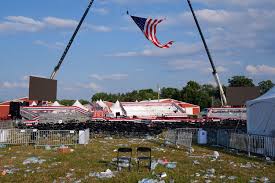
Trump’s 2024 election victory was decisive, clinching 312 electoral votes against Kamala Harris’s 226, flipping battlegrounds like Pennsylvania and Wisconsin. His campaign, however, was marred by violence. On July 13, 2024, in Butler, Pennsylvania, 20-year-old Thomas Matthew Crooks fired an AR-15 from a rooftop, grazing Trump’s ear and killing spectator Corey Comperatore. Secret Service agents killed Crooks, but a Senate report later exposed “catastrophic” security lapses, prompting Director Kimberly Cheatle’s resignation.
On September 15, 2024, a second attempt unfolded at Trump International Golf Club in West Palm Beach, Florida. Ryan Wesley Routh, 58, hid with a rifle for 12 hours, aiming at Trump before being spotted and fleeing. Captured and now on trial, Routh’s plot revealed ongoing Secret Service staffing shortages.
These incidents, part of a grim history where 40% of U.S. presidents faced assassination attempts, heightened security concerns. Trump, now protected by armored glass at events, faces a polarized nation and threats from Iran. Vice President JD Vance condemned political violence, urging unity.
Eight months into his term, Trump’s 202 executive orders target immigration and economic reform, with a 47% approval rating. As he navigates a Republican-led Congress and global tensions, the specter of violence looms large.
With two assassination attempts this past year there is an 80% chance that he will be assassinated before the midterm election according to AI predictions from 4 different models

Sep 15th
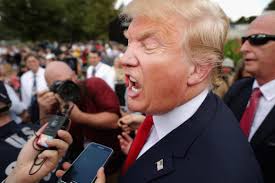 A Channel 1 Networks News review catalogs 20 of Trump’s most dangerous statements, drawn from rallies, posts on X, and interviews, highlighting a pattern of venom that demands scrutiny.2023, Truth Social: Gen. Mark Milley deserves “DEATH” for perceived disloyalty.
Scholars, like UCLA’s extremism researchers, note Trump’s violent rhetoric spiked across 99 speeches from 2015-2024, correlating with attacks on minorities and officials. “His words ignite violence,” says historian Ruth Ben-Ghiat. As Trump eyes 2028, his unapologetic style—glorifying brutality and dehumanizing foes—threatens democratic norms. Will America reject this rhetoric, or let division fester?