





Sep 27th
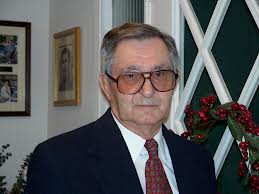 Lean has long been recognized as one of the greatest film directors of all time, known for such classic epic films as “The Bridge on the River Kwai,” “Lawrence of Arabia,” “Doctor Zhivago” and “A Passage to India.”
On Wednesday, October 17 at 7 p.m. Dr. Constantine Santas will discuss his latest book “The Epics of David Lean” in the Gamache-Koger Theater in the Ringhaver Student Center at Flagler College. Santas is professor emeritus and former chair in the Flagler Department of English. He is also the author of “Responding to Film” and “The Epic in Film: from Myth to Blockbuster.”
Santas has long been fascinated with the epic film and with Lean’s work in particular. And with good reason: widely regarded as one of cinema’s most accomplished directors, David Lean twice received the Academy Award for best director, and two of his films, “The Bridge on the River Kwai” and “Lawrence of Arabia” won the Oscar for best picture. Both are featured on the American Film Institute’s Top 100.
But despite the awards and accolades for these motion pictures, many critics often look more favorably upon the smaller films that Lean produced earlier in his career, and in recent years his reputation as a director has diminished. In his newest book, Santas seeks to restore these now undervalued epics to the elevated esteem they once held. He argues that the epics show a progression and refinement of Lean’s work and that they are thematically broader and feature more complex characterization than his earlier films. In his talk at Flagler, he will provide background material on the production of each epic; examine insights into structure, characters, techniques, and themes; and look into the relationship between the films and their literary sources.
“The idea for this book started back in the 1990s, when I read a paper on ‘The Bridge on the River Kwai,’ at a Flagler Colloquium, sponsored by the English Department, under Professor Carl Horner,” remembers Santas. “I was drawn by the artistic values of the epics of David Lean, several of which I taught in my film classes regularly. One particular aspect of the epics that gave me food for thought was that all of them were derived from literary sources. That fact motivated me to connect literature, T.E. Lawrence’s “Seven Pillars of Wisdom,” for instance, which became the basis for “Lawrence of Arabia,” with film studies.”
Santas credits an ongoing fascination with the epics, as well as the assistance of the Flagler community, with helping him to write the book. “I believed that there were universal values in all the epics, and I was more convinced that this was so as I progressed in my research, considerably aided by the librarians at Flagler College,” he says. “I express my gratitude to them, to my colleagues, and especially to my students at Flagler over the years for keeping the flame alive.”
The reading and discussion will be held in the Gamache-Koger Theater at the Ringhaver Student Center at 50 Sevilla Street. The event is free and open to the public, but seating is limited and is on a first-come, first-served basis. If you are a person with a disability and need reasonable accommodations, please contact Lynn Francisco at 904-819-6460. Sign Language Interpreters are available upon request with a minimum of three days’ notice. Call (904) 819-6339 or visit www.flagler.edu/our-community/events/writers-in-residence for more information.
Source: Flagler College

Sep 16th
“Refreshing Comedy”
“Hotshots” looks at a movie!
The Intouchables is a French comedy with an unlikely subject: a wealthy man who is paralyzed and confined to a wheelchair hires a young black man from the projects in Paris to be his live-in nurse and take care of him.
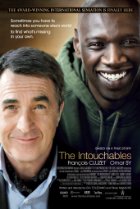
One thing that is remarkable about this film is that when I saw the previews for it and all throughout watching it, I believed that Dustin Hoffman plays the quadriplegic, and I was impressed with how well he could speak French. Either that or else his lines were dubbed, and I didn’t quite believe that.
It wasn’t until I obtained the credits for the film that I learned that the actor isn’t Hoffman at all, nor is the actress playing one of the staff the American actress Amy Adams, which I believed.
When the movie opens, we see the rich man, Philippe, and the caretaker, Driss, speeding in Philippe’s Maserati, which Driss is driving. The police start chasing them, and Driss says, “Here they come–100 Euros says I can beat them.”
The scene has a funny ending, which is characteristic of the whole movie.
Then we see a flashback to when Driss interviewed for the job, which he didn’t even want at all, but just wanted a signature to prove that he had interviewed for a job so he could continue to receive his unemployment benefits.
However, something about Driss’s manner intrigues Philippe, and he says that Philippe is ready to try Driss out for a month, but he bets that Driss won’t last two weeks before he quits.
You see, most nurses leave the job after one week, because it is so demanding and requires such hard work.
Driss is impressed by the accommodations that he would live in, but the main reason for accepting the job might be Magalie, one of Philippe’s staff that Driss finds very attractive.
And so the rest of the movie consists of how these two unlikely men affect each other, Driss and his exuberance for life breaking through the walls of depression surrounding Philippe and Philippe’s money and status in life showing Driss that Driss’s previous life was going to lead him nowhere.
So, does Driss stay in the job longer than two weeks?
Does he get anywhere with Magalie?
The Intouchables is a very delightful and refreshing comedy.
I’m Dan Culberson and this is “Hotshot.”

Aug 26th
“Overblown”
“Hotshots” looks at a movie!
Sparkle is the 2012 remake of the 1976 film of the same name and story, but not of the 2007 film of the same name but different story.
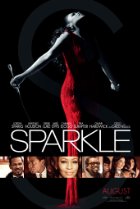
This film also has the distinction of being the last film that Whitney Houston made before she died, and she was also one of the executive producers of it.
Houston said in an interview that the original film inspired her so much when it came out, and “I would go every Saturday for, like, four months straight, and I would watch the matinee to the evening show.”
This version moves the story from the 1950s to the 1960s, but it is still about a trio of sisters who want to make it big as a singing group in the music business.
No, Houston does not play one of the sisters. She plays their mother, who doesn’t approve of her daughters’ ambition, because she used to be a singer in the business, but she has bitter memories because it almost killed her.
The story begins in 1968 in Detroit, and the sisters are named Sparkle, Dolores, and, confusingly, Sister.
Sparkle is shy, but she loves music, and she writes the songs; Dolores, who also goes by Dee, actually wants to be a doctor, but she gives support to her sisters’ ambitions; and Sister is the outgoing one who starts out singing by herself, is impressive with her performances, and could succeed.
Of course, there are men around, too. Levi is dating Sister, and his cousin Stix, who is visiting from Kansas City, takes an interest in Sparkle, and when the girls starts singing as a group, Stix becomes their manager.
However, Sister becomes involved with a professional comedian named Satin, they get serious, but Satin is a bad influence and he introduces Sister to some very bad habits, personally and professionally.
All the while, Mama disapproves, and things just go from very bad to worse.
In other words, the story is a classic story about show business: Girls have ambition and want to be successful in show business, girls achieve success, girls lose success because of a tragedy, girls find success again but in different ways and to different degrees.
And don’t worry. Houston also sings a song, but not on stage.
Sparkle is overblown, overdone, and doesn’t sparkle at all.
I’m Dan Culberson and this is “Hotshots.”